Choosing the wrong oral liquid bottle can lead to leaking caps, dosing errors, product degradation, or even regulatory rejection. This guide breaks down the three factors that matter most — capacity, material, and sealing performance — so brand owners, pharmaceutical manufacturers, and packaging buyers can make a decision backed by data rather than guesswork.
Why the Right Oral Liquid Bottle Matters
An oral liquid bottle is not just a container — it is part of the product's stability system, dosing accuracy, and user experience. A syrup, tincture, or nutraceutical liquid that is chemically stable in the lab can still fail on the shelf if the bottle allows oxygen or UV light to pass through, or if the cap loosens during transit.
For example, a vitamin D liquid supplement stored in a clear PET bottle without UV protection can lose measurable potency within 6–9 months, while the same formula in an amber glass or UV-stabilized PET bottle can retain stability closer to the full 24-month shelf life. This single packaging decision can be the difference between a product recall and a successful product line.
Step 1: Matching Bottle Capacity to Product Use
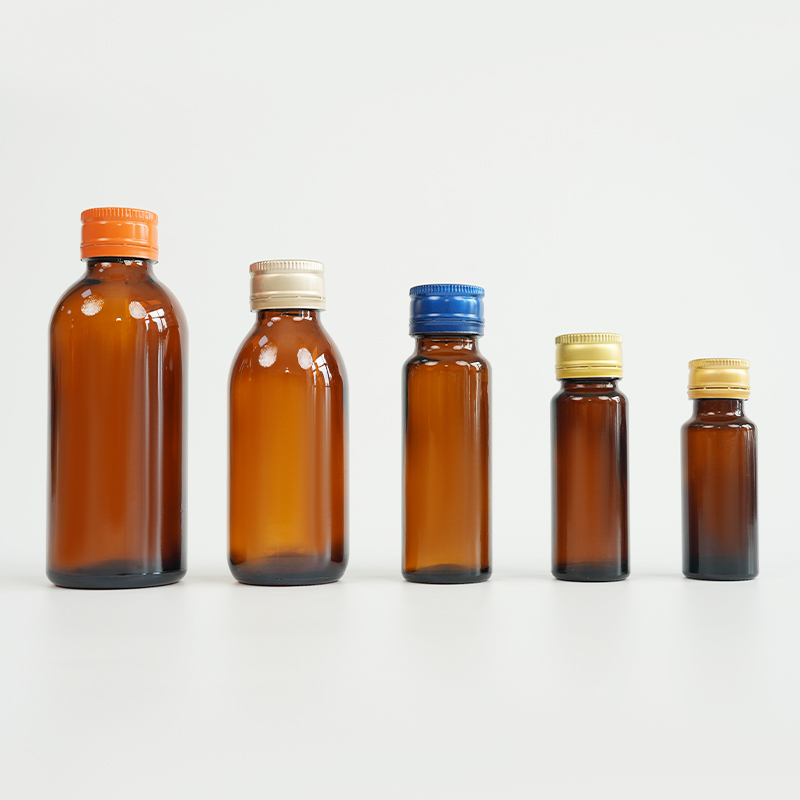
Capacity is usually the first specification buyers decide on, but it is frequently chosen based on habit rather than actual dosing needs. The right capacity depends on the daily dose, treatment duration, and target user (pediatric, adult, or elderly).
| Capacity Range |
Typical Use Case |
Common Dosing Pattern |
| 10–30 mL |
Concentrated drops, pediatric syrups, tinctures |
Dropper or oral syringe, 0.5–2 mL per dose |
| 50–100 mL |
Cough syrups, short-course antibiotics |
Dosing cup, 5–10 mL, 2–3 times daily |
| 120–250 mL |
Daily-use tonics, herbal supplements |
Dosing cup, 10–20 mL, once or twice daily |
| 300–500 mL |
Long-course treatments, hospital/institutional use |
Multi-week supply, refill or bulk dispensing |
A practical rule of thumb: divide the total treatment volume by the number of expected doses, then add 5–10% overage for priming loss in droppers or pumps. A 7-day course dosed at 10 mL twice daily needs at least 140 mL of product — a 150 mL bottle, not a 100 mL one, avoids running short before the course ends.
Step 2: Comparing Bottle Materials
Material choice affects chemical compatibility, light protection, weight, cost, and drop resistance. The four most common materials used for oral liquid bottles are PET, HDPE, PP, and glass.
| Material |
Barrier Performance |
Best For |
Limitations |
| PET |
Moderate oxygen/moisture barrier; good clarity |
Nutraceuticals, syrups, retail products needing shelf appeal |
Limited resistance to strong solvents; needs UV additive for light-sensitive formulas |
| HDPE |
Strong moisture barrier; naturally opaque |
Antibiotics, hospital liquids, formulas sensitive to light and moisture |
Not transparent, limiting shelf visibility |
| PP |
Good chemical resistance; withstands higher heat |
Products requiring hot-fill or autoclave sterilization |
Slightly less clarity than PET |
| Glass (Type III/amber) |
Excellent barrier; near-zero permeability |
Highly sensitive APIs, premium tinctures, long shelf-life formulas |
Heavier, higher freight cost, breakage risk |
As an example: a herbal tincture with a high alcohol content will interact with some plastics over time, causing leaching or bottle clouding. Amber glass avoids this entirely and is why most alcohol-based tinctures remain in glass despite the higher unit cost. Conversely, a water-based children's vitamin syrup has low solvent risk, making PET or HDPE a more cost-effective, shatter-resistant choice.
Step 3: Evaluating Sealing Performance
Sealing performance determines whether a bottle prevents leakage, contamination, and oxidation over its full shelf life. Three components work together: the cap design, the liner or wad, and the neck finish tolerance.
Common Closure Types
- Tamper-evident screw caps — a breakaway ring shows if the bottle has been opened; standard for OTC and pharmaceutical liquids.
- Child-resistant (CR) caps — require a push-and-turn or squeeze-and-turn action; mandatory in many markets for products meeting the U.S. Poison Prevention Packaging Act threshold.
- Induction-sealed liners — a foil liner heat-bonded to the bottle neck, offering the strongest barrier against leakage and evaporation before first use.
- Dropper and pump closures — used for low-volume, high-precision dosing; require tighter neck-finish tolerances to avoid air ingress.
Sealing failures are rarely caused by the cap alone — mismatched neck finishes are the more frequent culprit. A bottle with a 20mm neck finish but a cap manufactured to a slightly different thread pitch can pass a visual check yet fail a torque or leak test. Reputable suppliers test sealing performance using:
- Torque testing (application and removal torque, typically 8–16 inch-lbs depending on cap size)
- Vacuum or pressure decay leak testing
- Inverted or on-side storage tests to detect slow seepage over 30–90 days
- Drop testing to confirm the seal holds after transit-simulated impact
A practical example: a supplement brand shipping via international freight reported a 3% leakage complaint rate with a standard flat-liner cap. Switching to an induction-sealed liner combined with a foam-backed cap wad reduced complaints to under 0.3% — illustrating how a small closure upgrade can materially cut returns and reputational damage.
Regulatory and Compliance Considerations
Depending on the target market and product classification, oral liquid bottles may need to meet specific regulatory standards:
- Food/pharma-grade resin certification — confirms the plastic resin is approved for contact with ingestible liquids.
- USP light transmission testing — for light-sensitive formulations, confirming the container blocks sufficient UV/visible light.
- Child-resistant packaging compliance — required for many prescription and certain OTC liquids depending on jurisdiction.
- Extractables and leachables testing — verifies the bottle does not transfer harmful substances into the liquid over its shelf life.
Buyers exporting internationally should request a certificate of analysis (COA) and migration test reports from suppliers before committing to a large production run, since compliance requirements vary meaningfully between the U.S., EU, and other regions.
Design Features That Improve Usability and Safety
Beyond the core specifications, several design details noticeably affect the end-user experience:
- Graduated dosing marks molded directly into the bottle reduce reliance on a separate cup and lower dosing errors, particularly for pediatric liquids.
- Wide-mouth necks simplify filling and cleaning for viscous liquids like syrups.
- Textured grip panels improve handling for elderly users or those with limited dexterity.
- Frosted or amber tinting combines light protection with a premium shelf appearance, useful for tinctures and nutraceutical brands.
Cost, MOQ, and Supplier Considerations
Unit cost is only one part of the total packaging cost. Buyers should also weigh:
- Minimum order quantity (MOQ) — stock bottle molds often allow MOQs as low as a few thousand units, while custom molds may require 50,000–100,000+ units to justify tooling cost.
- Freight weight — glass bottles can weigh 3–5 times more than an equivalent PET bottle, materially increasing shipping cost on large orders.
- Lead time — stock bottles typically ship faster than custom-molded designs, which may require 8–12 weeks for tooling and sampling.
- Supplier quality consistency — request pre-production samples and, for large orders, a third-party inspection before shipment.
A useful approach for new brands: start with a stock bottle and closure to validate the product in market, then move to a custom mold once volume justifies the tooling investment.
Sustainability Factors Worth Weighing
Recycled PET (rPET) is increasingly used for oral liquid bottles where light protection is not critical, offering a lower carbon footprint without sacrificing barrier performance for short-shelf-life products. Lightweighting — reducing wall thickness while maintaining structural strength — is another common strategy, and can cut material use by 10–15% on well-engineered designs without compromising drop resistance.
A Practical Checklist Before You Order
- Calculate required capacity from dose size, frequency, and treatment length, plus overage
- Confirm chemical compatibility between the formula and candidate materials
- Decide whether light protection is needed and choose material/tint accordingly
- Match cap type to safety requirements (child-resistant, tamper-evident) and dosing method
- Request torque, leak, and drop test data from the supplier
- Verify resin certification and, if applicable, extractables/leachables data
- Compare stock vs. custom mold options against your order volume and timeline
Final Thoughts
There is no single "best" oral liquid bottle — only the best combination of capacity, material, and sealing system for a specific formula, user group, and market. Treating packaging selection as a data-driven decision, backed by compatibility testing and closure validation, protects product stability, reduces complaint rates, and ultimately builds more trust with the end user than choosing on price or appearance alone.

 English
 русский
 Español
 عربى
عربى
 Read More
 OEM/ODM Empty Perfume Vials Manufacturers
