
 English
 русский
 Español
 عربى
عربى
Tubular Glass Vial Manufacturers
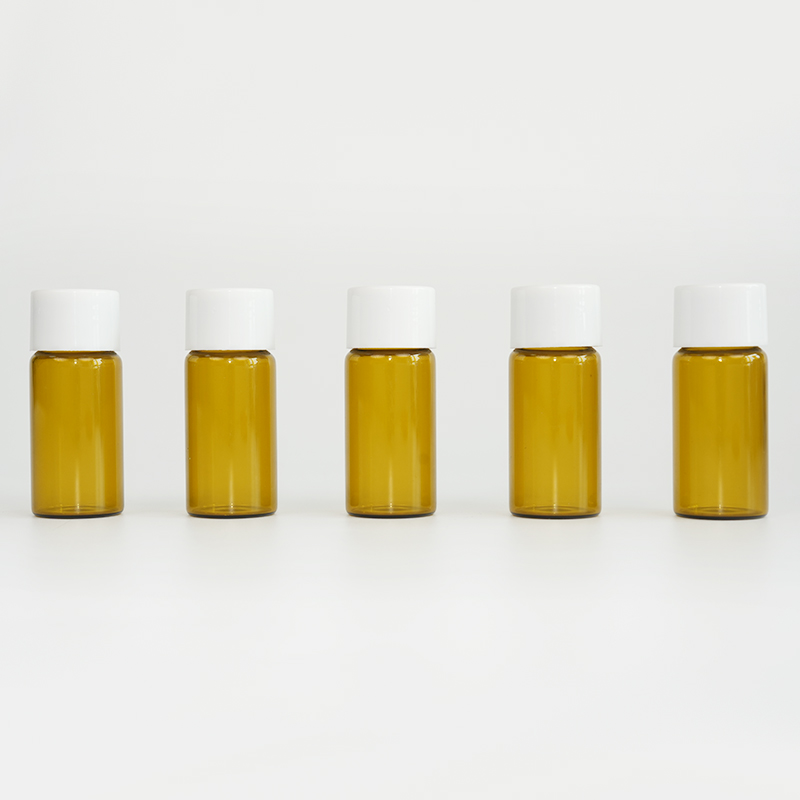
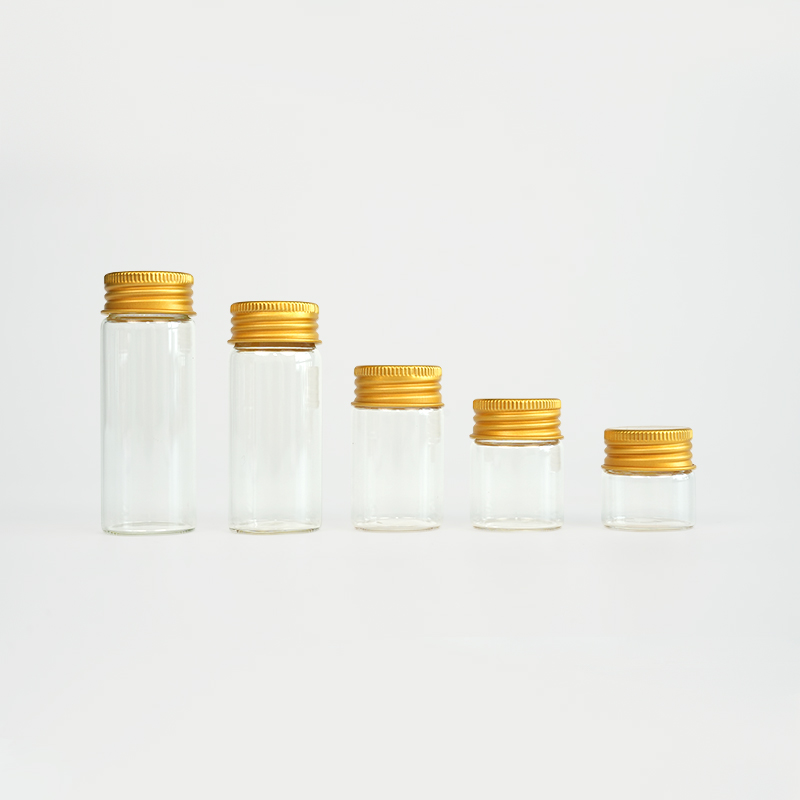
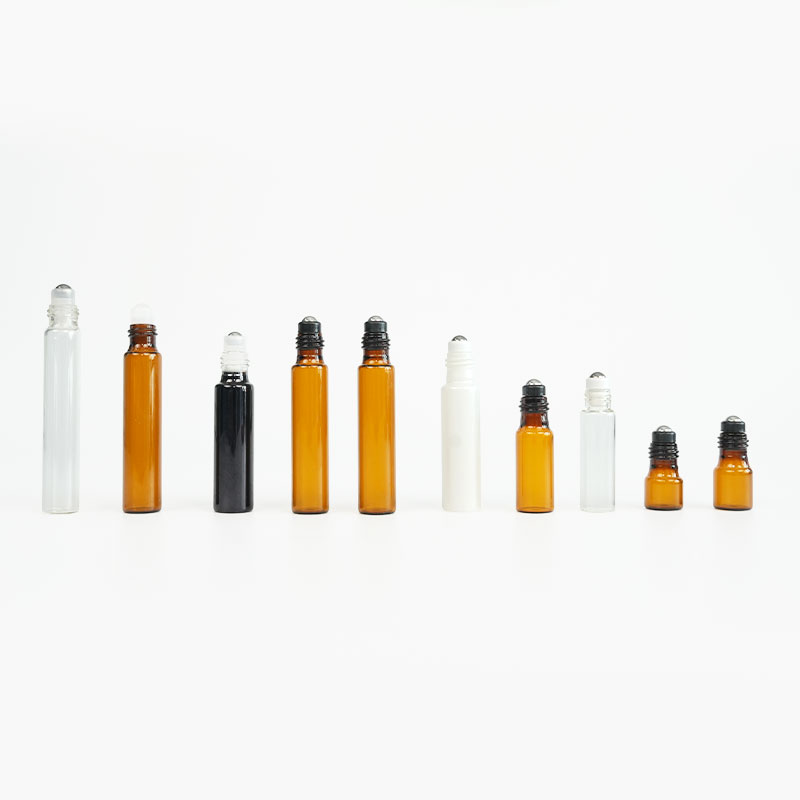
Drawn-glass vials are manufactured through the precision cutting and processing of high-quality pharmaceutical-grade glass tubing. Characterized by their thin walls, precision dimensions, and high clarity, they are widely used for packaging product samples and micro-volume reagents.
Primary Applications: Suitable for packaging and displaying medical-grade active serums, skincare essence samples, laboratory micro-reagents, powdered products, cosmetic trial packs, and small-dose health supplements.
Material Characteristics: Made from high-purity pharmaceutical glass; the vial body is clear, free of bubbles and impurities, and chemically stable. It is resistant to corrosion and does not react with the contents (such as essences or reagents), ensuring safety for both cosmetic and pharmaceutical applications.
Structural Design: High dimensional precision; available with customizable neck finishes (snap-on or threaded) and compatible with various closures—such as rubber stoppers with aluminum caps, dropper caps, and tamper-evident screw caps—offering excellent assembly versatility.
Key Advantages: Lightweight, which effectively reduces logistics and shipping costs; exquisite, clear appearance for superior product presentation; and a wide range of small-volume specifications that precisely meet the needs for micro-dosing and brand sample promotions.
Precautions: Protect the thin-walled body from scratches by hard objects and strong impacts; control liquid flow rates during high-speed filling to minimize breakage caused by impact forces; and avoid contact with sharp objects during storage.
About Ousibei
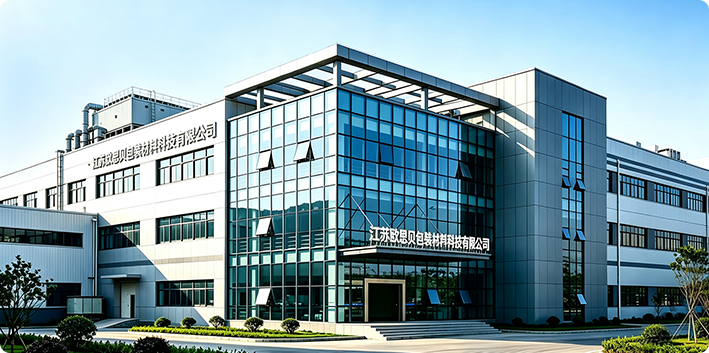
As China Tubular Glass Vial Manufacturers and Custom Tubular Vial Suppliers, Ousibei specializes in the research, development, and production of glass
packaging materials, supported by a complete production system and quality control process.
 Read More


News
-
As a glass packaging manufacturer with over two decades in the field, we've seen how the right vial can make all the difference in product stability and user confidence. Among the many formats we produce, the tubular glass vial stands out as a versatile and reliable choice for e...
READ MORE -
Oral liquid products place special demands on packaging. The bottle must protect the formulation, maintain stability over time, fit high-speed filling lines, and communicate trust to the end user. As a glass packaging manufacturer with more than two decades of experience, we hav...
READ MORE -
Materials & Packaging Glass or Plastic: The Real Lifespan of a Liquid Medicine Bottle Two materials, two very different definitions of "durable." One resists chemical aging for decades. The other survives the drops, shipping, and daily handling that actually destroy bottles....
READ MORE
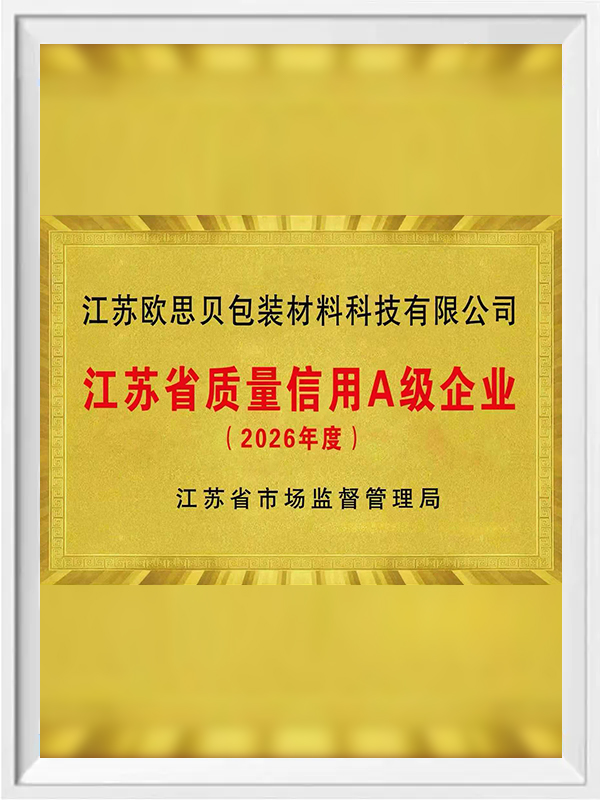
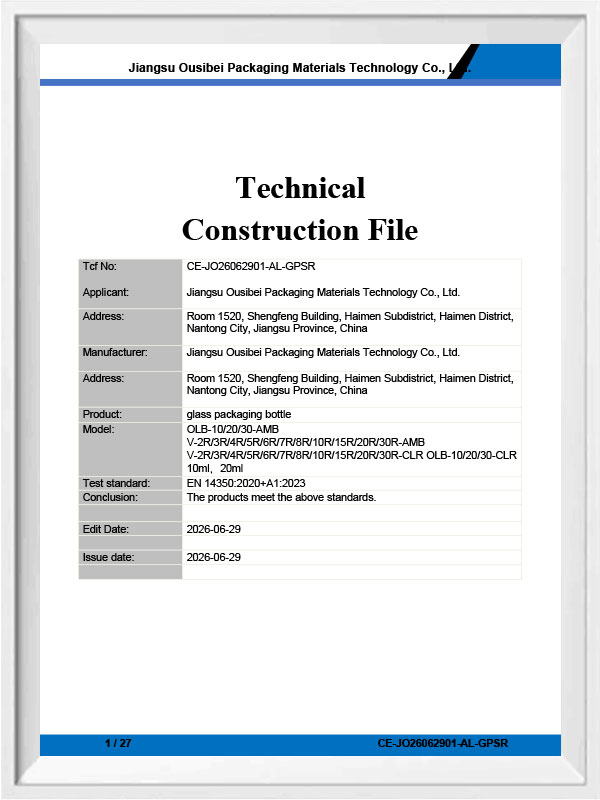
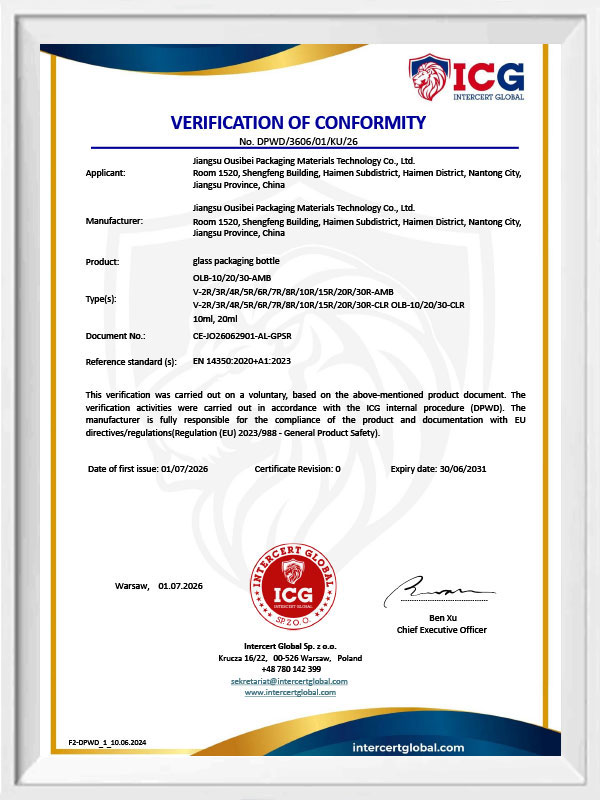
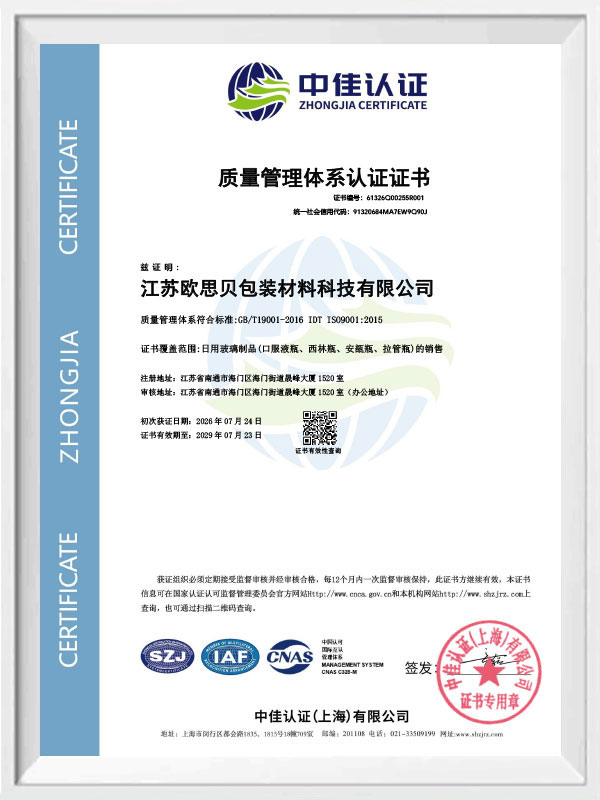
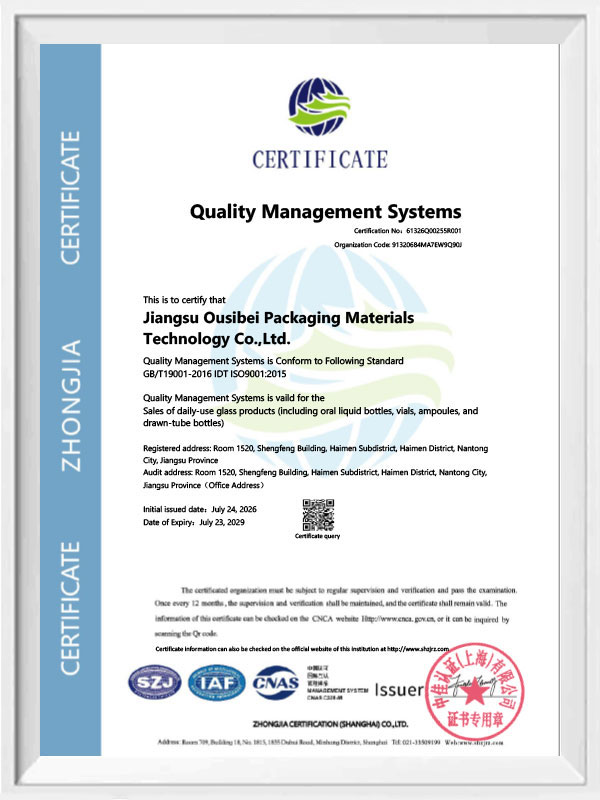
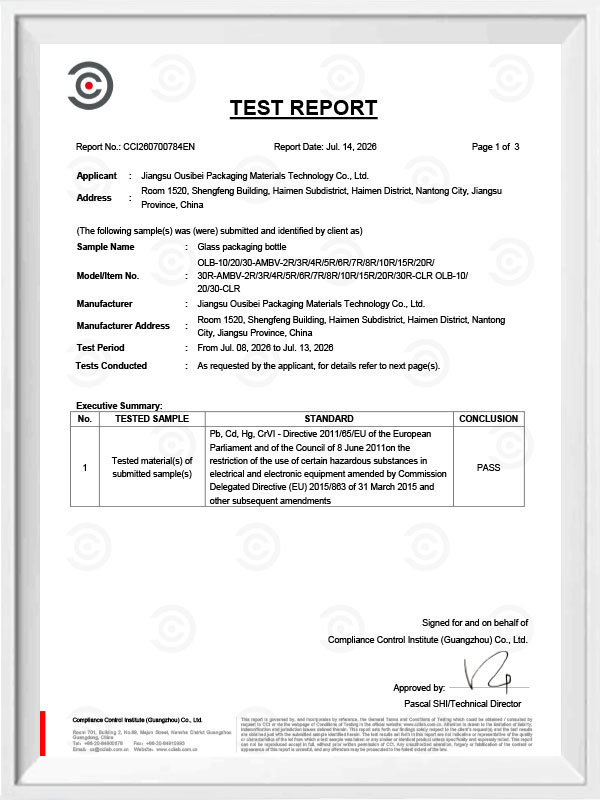
Certificate Of Honor
Industry Knowledge Expansion
Jiangsu Ousibei Packaging Material Technology Co., Ltd. is a Tubular vial manufacturer supplying drawn-glass vials formed from pharmaceutical-grade glass tubing. Our range covers clear and amber tubular vials in 5 ml to 50 ml capacities, produced on 20 dual production lines that run from tube forming through annealing, inspection, packing and warehousing without intermediate outsourcing.
What We Supply in the Tubular Vial Range
Drawn-glass vials are cut and shaped from high-purity glass tubing rather than blow-molded, which gives thin, uniform walls, tight dimensional control and high clarity. We form the mouth, body and bottom in one continuous operation, so the neck finish stays concentric with the body and remains compatible with automated filling and sealing equipment.
Our tubular vial range is built around two material colours and a set of standard capacities, with neck finishes selected for the closure system the filling line uses. The table below shows how the range maps to typical applications.
| Product | Material & Colour | Capacities | Typical Fit |
|---|---|---|---|
| Clear glass tubular vial | Clear borosilicate | 5–50 ml | Non-photosensitive oral liquids, hydrosols, amino acid drinks, colorless reagents |
| Amber glass tubular vial | Amber borosilicate | 5–50 ml | Peptides, vitamin C, botanical extracts, photosensitive serums and reagents |
| Glass roll-on bottle | Clear, amber or blue cosmetic glass | 2–30 ml | Essential oils, perfume oils, facial treatment oils, massage blends |
Application Fit Across Healthcare, Skincare and Laboratory Use
Tubular vials carry small liquid volumes where transparency, sealing and chemical inertness matter more than wall thickness. The drawn process keeps the wall thin and even, which supports fast heat transfer during sterilization and clean visual inspection of the contents.
- Pharmaceutical and nutraceutical: photosensitive oral solutions, vitamin syrups, peptide drinks, collagen liquids and liquid botanical extracts.
- Professional skincare: concentrated serums, repair essences and single-use treatment samples.
- Laboratory and R&D: micro-volume reagents, standard solutions, retention samples and trial formulations.
- Fragrance and personal care: perfume oils, aroma blends and roll-on dispensing formats.
Where a project needs a different container format, our wider Product range includes Freeze Dried Vials for lyophilized powders and Oral liquid bottle formats for larger-dose liquids.
Materials and Critical Specifications
We form tubular vials from neutral borosilicate glass tubing, with soda-lime options for suitable oral liquid applications. Borosilicate gives low metal-ion leaching, high chemical inertness and resistance to high-temperature sterilization, which is why it is the default choice for pharmaceutical and skincare concentrates.
- Capacity: 5, 6, 8, 10, 15, 20, 25, 30, 40 and 50 ml standard sizes.
- Wall thickness: servo-controlled during forming for uniform wall and no eccentricity.
- Neck finish: crimp-neck or screw-thread, matched to the closure system.
- Mouth tolerance: bottle mouth dimensional tolerance can reach ±0.03 mm for reliable crimp sealing.
- Annealing: constant-temperature annealing at 580–620 °C for 2–3 hours, followed by gradient cooling to remove internal stress.
Capacity, Throughput and Production Control
Our 20 dual production lines are split into two sections: 10 full-process lines for neutral borosilicate tubular vials and 10 for soda-lime oral liquid bottles. Each line covers tube forming, bottle production, annealing, inspection, packing and warehousing in one flow, so there is no intermediate outsourcing or external transfer between stages.
A single forming machine runs at up to 120 pcs/min. With 20 lines operating at full load for 20 hours, daily capacity reaches approximately 2.88 million pieces, equivalent to about 864 million glass bottles per year across 300 production days.
Automation Integration and Filling Line Compatibility
Tubular vials are usually filled, stoppered and capped on high-speed automated lines, so dimensional consistency at the neck and body is the specification that decides whether a run is smooth or interrupted. We control wall thickness and mouth diameter during forming rather than sorting for it afterwards.
- Standardized neck dimensions for crimp, screw and dropper closure systems.
- Compatibility design for filling lines and closure systems, including matching aluminum caps, rubber stoppers and droppers.
- Uniform wall thickness to reduce jamming and breakage during high-speed filling.
- Surface finishing options — screen printing, hot stamping and spray coating — for brand and batch identification.
Quality Inspection and Acceptance
Inspection is built into the line rather than added at the end. High-speed vision cameras check bottle height, outer diameter, inner mouth diameter, wall thickness and bottom concavity after forming, and automatically reject out-of-tolerance pieces while storing inspection data for traceability.
After annealing, a final inspection machine screens for 77 defect types, including cracks, bubbles, black spots, stones, chipped mouths, uneven bottoms and loose glass particles. Qualified vials move to the buffer and packing system; defective glass is crushed and returned to the remelting workshop.
- 100% inspection of finished products against customer requirements and the applicable international standard.
- Each carton carries a traceability QR code recording the forming machine, batch number and production time.
- Testing reports issued with sample development and mass production.
Customization and OEM/ODM Development
We produce to drawings or samples for customers with an established vial, and we also develop new structures jointly where the packaging concept is still open. Customization covers capacity from 1 ml to 100 ml, neck and body structure, glass material selection, surface finishing and closure matching.
- Structure: screw neck, vial-type neck, straight body, curved neck, thick-wall and special-shaped designs.
- Material: soda-lime, low borosilicate, medium borosilicate and high borosilicate glass.
- Development flow: technical requirement discussion, material and structure proposal, mold design, sample production and testing, client confirmation, then mass production and delivery.
- MOQ: lower minimums available for standard products and trial orders; customized items are evaluated on structure, mold complexity, material and process.
Handling, Packaging and Serviceability
Thin-walled vials need controlled handling from filling through storage. We recommend managing liquid flow rates during high-speed filling to limit impact forces, keeping vials away from sharp objects and hard contact that can scratch the body, and using the original carton and pallet configuration for transport and warehouse storage.
Finished vials are counted, boxed, sealed, labelled and palletized automatically, producing bare-bottle packs ready for pharmaceutical packaging customers. Spare parts, replacement tooling and technical support are handled through the same production and sales team that built the order.
Information We Use to Configure Your Solution
A workable proposal needs the working point, the material and the production target. The list below is what we ask for before quoting a tubular vial project.
- Fill volume and headspace, plus the required nominal capacity.
- Contents type, pH range and photosensitivity, to confirm clear or amber glass.
- Closure system: crimp, screw thread, dropper or roller ball, with cap and stopper details.
- Filling line interface: neck dimensions, feed format and line speed.
- Sterilization or processing route, and any regulatory documentation required.
- Branding requirements: screen print, hot stamping or spray coating artwork.
- Order quantity, trial quantity and delivery destination.
Frequently Asked Questions
What capacities do your tubular vials cover?
Standard tubular vial capacities run from 5 ml to 50 ml, including 5, 6, 8, 10, 15, 20, 25, 30, 40 and 50 ml. Our customization capability extends from 1 ml to 100 ml where a project needs a non-standard volume.
Should we choose clear or amber glass?
Clear glass suits colorless or non-photosensitive contents and allows direct visual inspection for impurities or separation. Amber glass blocks UV rays and limits light-induced oxidation, so it is the better fit for peptides, vitamin C, botanical extracts and other photosensitive formulations.
Which closures work with your vial necks?
We form both crimp-neck and screw-thread finishes. Crimp necks accept rubber stoppers with aluminum caps; screw necks accept tamper-evident screw caps and dropper caps. Matching caps, stoppers and droppers can be supplied as a complete set with the vials.
How is dimensional consistency controlled for automated filling?
The servo system controls wall thickness uniformity during forming, and the bottle mouth dimensional tolerance can reach ±0.03 mm. Vision inspection after forming checks height, outer diameter, inner mouth diameter, wall thickness and bottom concavity, and rejects out-of-tolerance pieces automatically.
Can you produce vials to our own drawing or sample?
Yes. We reproduce existing products accurately from customer drawings or samples, and we also support joint development based on packaging needs, target market and application scenario. The process runs from technical requirement discussion through material and structure proposal, mold design, sample testing and client confirmation to mass production.
What packaging do the vials ship in?
Qualified vials are arranged by vacuum suction robotic arms and packed automatically, covering counting, paper box packing, box sealing, outer carton labelling and palletizing. Each carton carries a traceability QR code recording the forming machine, batch number and production time.
Quick Links
Product
Contact Information
- Add: Suite 1520, Sucheng Building, 233 Ruijiang Road, Haimen District, Nantong City, Jiangsu Province, China
- Tel: +86-18795716669
-
Email:
manager@ausbaypkg.com sales@ausbaypkg.com export@ausbaypkg.com
Contact Us
Copyright by Jiangsu Ousibei Packaging Material Technology Co., Ltd. Rights
Reserved.
 Custom Tubular Glass Vial Manufacturers
