
 English
 русский
 Español
 عربى
عربى
Curved neck ampoule Manufacturers
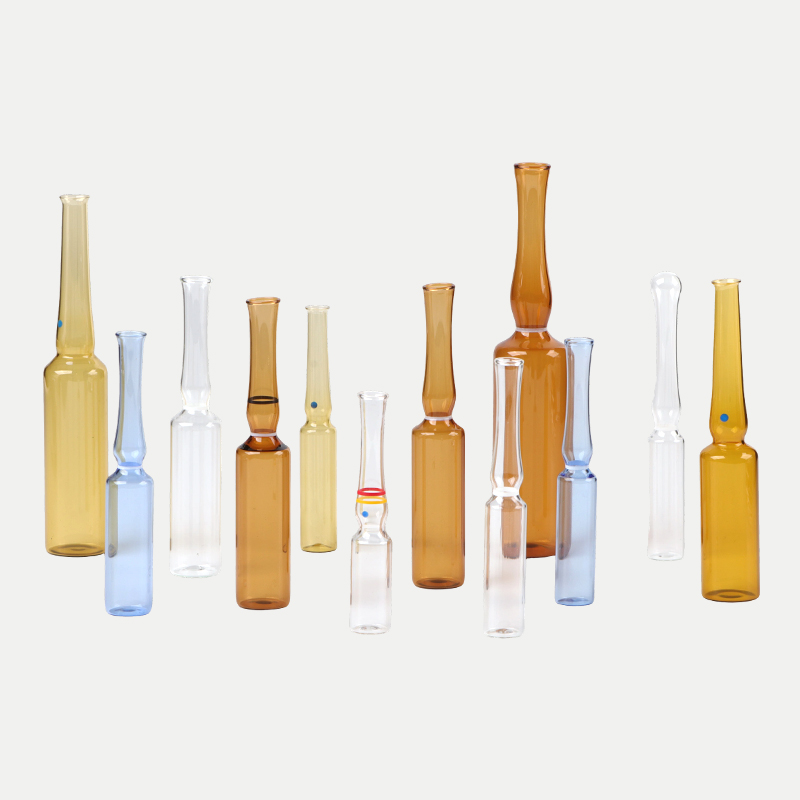
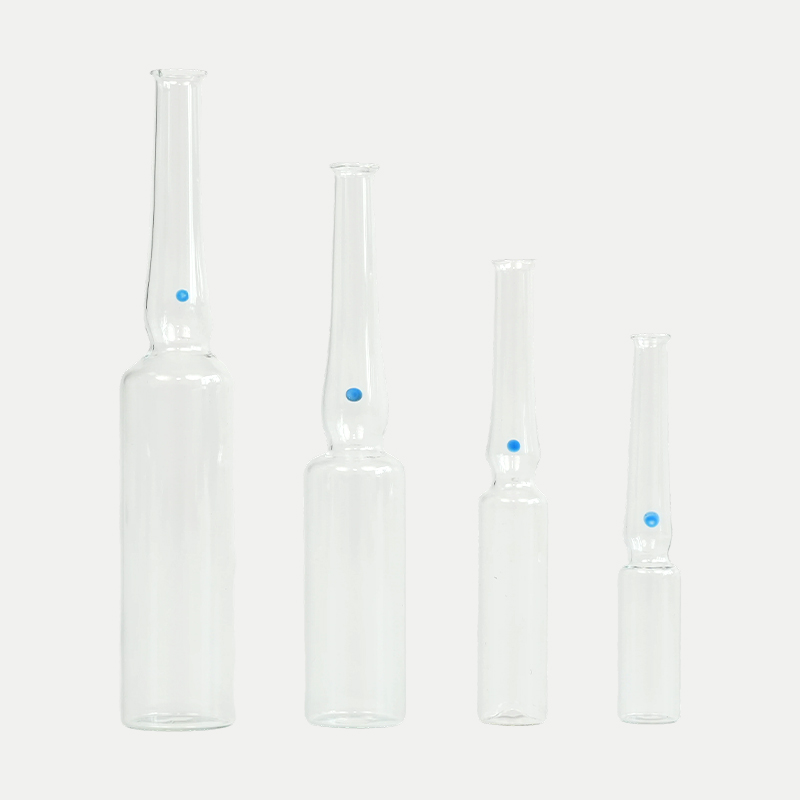
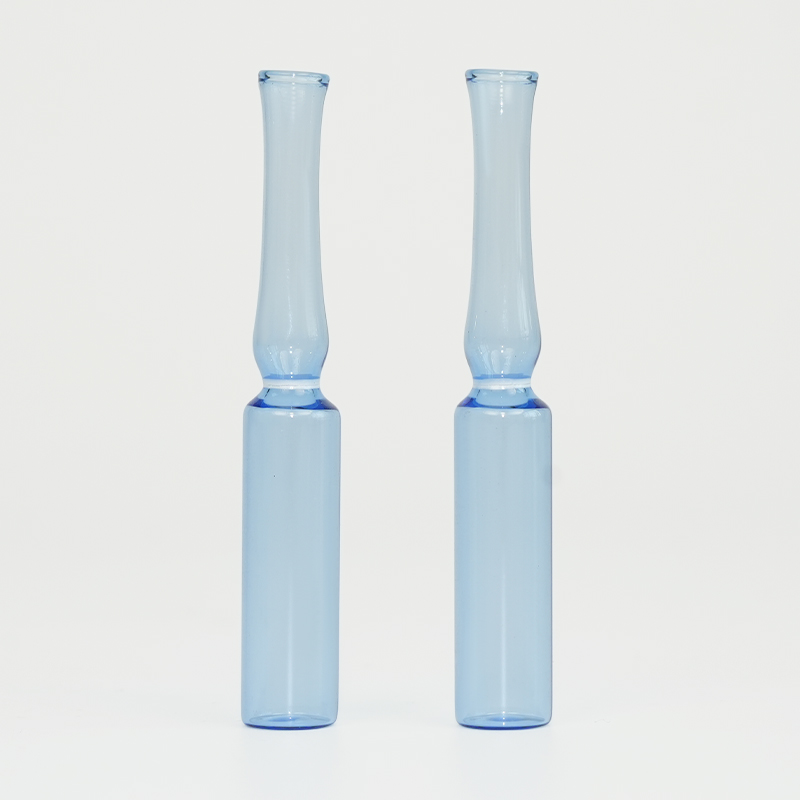
The curved-neck ampoule is a disposable, fully sealed glass container designed specifically for sterile injections. Thanks to its easy-snap opening and sterile sealing capabilities, it has become the standard packaging for medical injectables and high-purity active solutions.
Primary Applications: Used for the disposable sealed filling and clinical administration of medical solutions, high-purity medical-grade aesthetic concentrates, sterilized serums, and micro-volume diagnostic reagents.
Material Characteristics: Manufactured as a single, seamless piece from neutral borosilicate glass; the material is sterile, non-toxic, and offers excellent airtightness and a strong barrier against oxygen and microorganisms, ensuring no leaching of harmful substances during long-term storage.
Structural Design: Features a precision-engineered "easy-snap" breakpoint at the neck, allowing for a clean, smooth break by hand without the need for cutting tools or generating glass shards; the design is a fully sealed, integrated unit with no external cap.
Core Advantages: Provides a continuous, seamless seal throughout its lifespan, eliminating the risk of secondary contamination; offers safe and convenient opening with no risk of falling shards; its single-use nature complies with medical sterile handling protocols, ensuring maximum safety.
Precautions: Keep the neck away from the face and skin when snapping it open to prevent accidental injury; once opened, the contents must be used immediately—do not store or reuse the ampoule.
About Ousibei
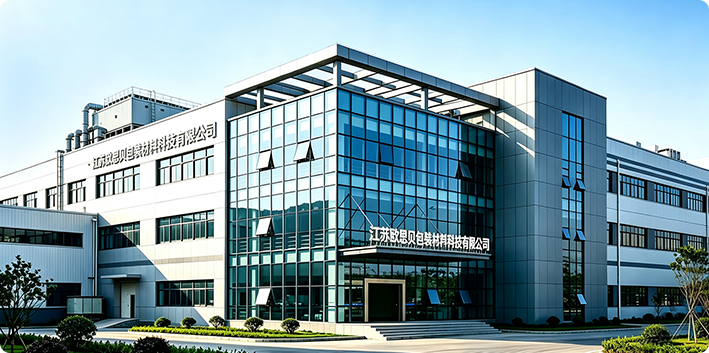
As China Glass Curved Neck Ampoule Bottle Manufacturers and Curved neck ampoule Suppliers, Ousibei specializes in the research, development, and production of glass
packaging materials, supported by a complete production system and quality control process.
 Read More


News
-
As a glass packaging manufacturer with over two decades in the field, we've seen how the right vial can make all the difference in product stability and user confidence. Among the many formats we produce, the tubular glass vial stands out as a versatile and reliable choice for e...
READ MORE -
Oral liquid products place special demands on packaging. The bottle must protect the formulation, maintain stability over time, fit high-speed filling lines, and communicate trust to the end user. As a glass packaging manufacturer with more than two decades of experience, we hav...
READ MORE -
Materials & Packaging Glass or Plastic: The Real Lifespan of a Liquid Medicine Bottle Two materials, two very different definitions of "durable." One resists chemical aging for decades. The other survives the drops, shipping, and daily handling that actually destroy bottles....
READ MORE
Certificate Of Honor
Industry Knowledge Expansion
Jiangsu Ousibei Packaging Material Technology Co., Ltd. manufactures Curved neck ampoule containers for sterile injectables, medical aesthetic concentrates, sterile serums and micro-volume diagnostic reagents. The range covers clear, amber and blue glass in 2 mL to 30 mL, formed on our own tubular glass lines from neutral borosilicate tube.
Our Position in Curved Neck Ampoule Manufacturing
Ousibei is a curved neck ampoule manufacturer working from glass tube forming through bottle forming, annealing, inspection and packing inside one plant. Twenty dual production lines run in parallel, ten of them dedicated to neutral borosilicate tubular vials and ampoule-type containers, so no intermediate process is outsourced or transferred between sites.
The curved-neck ampoule is a one-piece, fully sealed glass container. Because the body is closed by melt sealing rather than a stopper or cap, the fill stays isolated from the headspace environment for the whole shelf life. Our engineering team develops the neck geometry, breakpoint score and wall thickness together, since those three variables decide both filling behaviour and opening safety.
Range: Glass Colour and Capacity
Three colour variants are produced on the same forming platform, each matched to a different light-exposure requirement. Capacity runs from 2 mL through 30 mL, and the same neck design is applied across the series so filling and sealing settings transfer between sizes.
| Variant | Glass | Light Protection | Typical Fill |
|---|---|---|---|
| Clear glass ampoule with curved neck | Type I borosilicate | None — full visual inspection | Aqueous injections, amino acid solutions, hydrating serums |
| Amber glass ampoule with curved neck | Type I medium borosilicate | Blocks UV, limits oxidation | Peptides, vitamin C, light-sensitive injectables |
| Blue glass ampoule with curved neck | Type I medium borosilicate | Highest shielding of the three | Highly light-sensitive actives, antioxidant and whitening serums |
Application Fit
The sealed, single-use format suits products that must reach the point of use without a re-closable closure. Pharmaceutical filling lines use it for sterile injectables and biological peptide injections; medical aesthetics brands use it for hydration and repair concentrates; laboratories use it for light-sensitive reference standards and micro-volume reagent aliquoting.
- Pharmaceutical: sterile injectables, vitamin injections, biological peptide injections.
- Medical aesthetics: mesotherapy and hydration serums, reparative ampoule essences.
- Laboratory: light-sensitive standards, small-volume reagent dispensing.
Where a re-closable container is required instead, our Oral liquid bottle and Tubular vial ranges cover crimp-finish and stopper-based formats for the same filling environments.
Material and Structural Specifications
Neutral borosilicate tube gives the ampoule its chemical stability, low leachable profile and resistance to 121 °C sterilisation and thermal shock. The body is formed as a single seamless piece, so there is no gasket, no stopper and no secondary seal to fail.
- Precision-engineered easy-snap breakpoint at the neck, opened by hand without tools.
- Uniform stress distribution at the score line for a clean fracture surface free of loose shards.
- Melt-sealed, integrated unit with no external cap; vacuum-tight for long-term storage.
- Bottle mouth dimensional tolerance controlled to ±0.03 mm on our forming equipment, supporting consistent crimp and sealing interfaces.
- Wall thickness uniformity held by servo-controlled forming.
Forming, Annealing and Inspection
Glass tubes are automatically unpacked, oriented and fed to the heating station, where the main machine heats them in sections at 1200–1450 °C. Stretching, cutting, neck forming and mould shaping produce the mouth, body and bottom in one pass, with no manual contact with the bottle body.
After forming, a continuous mesh-belt furnace anneals at 580–620 °C for 2–3 hours with a controlled cooling gradient, relieving internal stress that would otherwise cause cracking during washing or sterilisation. High-speed vision stations check height, outer diameter, inner mouth diameter, wall thickness and bottom concavity, and reject out-of-tolerance pieces automatically.
A final inspection machine screens for 77 defect types including cracks, bubbles, black spots, stones, chipped mouths, uneven bottoms and loose glass particles. Each carton carries a traceability QR code recording the forming machine, batch number and production time.
Customisation and Line Compatibility
We develop ampoule geometry against the filling and sealing equipment it will run on. Customisation covers capacity from 1 mL to 100 mL, curved-neck and other neck structures, wall thickness, and glass selection across soda-lime, low, medium and high borosilicate grades. Surface finishing options include screen printing, hot stamping and spray coating for brand identification.
For customers with an existing qualified container, we reproduce from drawings or physical samples. For new programmes, the sequence runs from technical requirement discussion through material and structure proposal, mould design, sample production and testing, customer confirmation, then mass production.
Quality Evidence and Acceptance
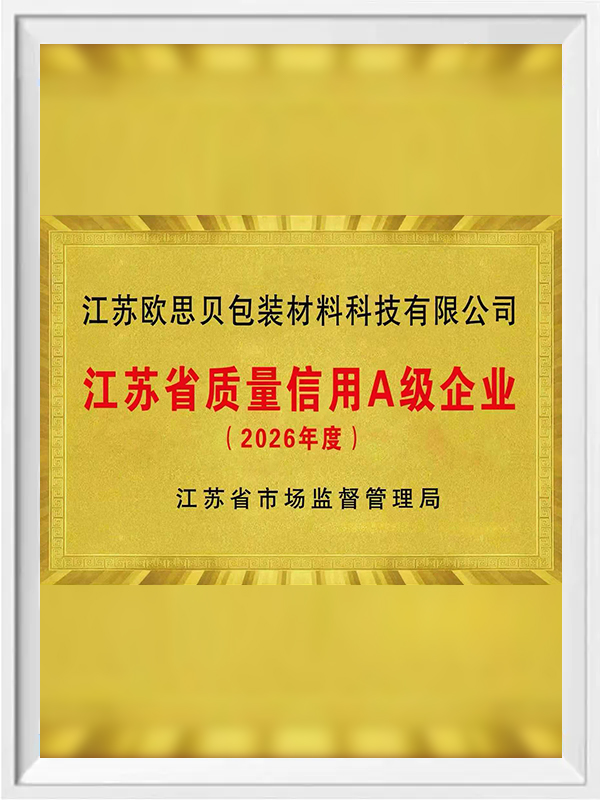
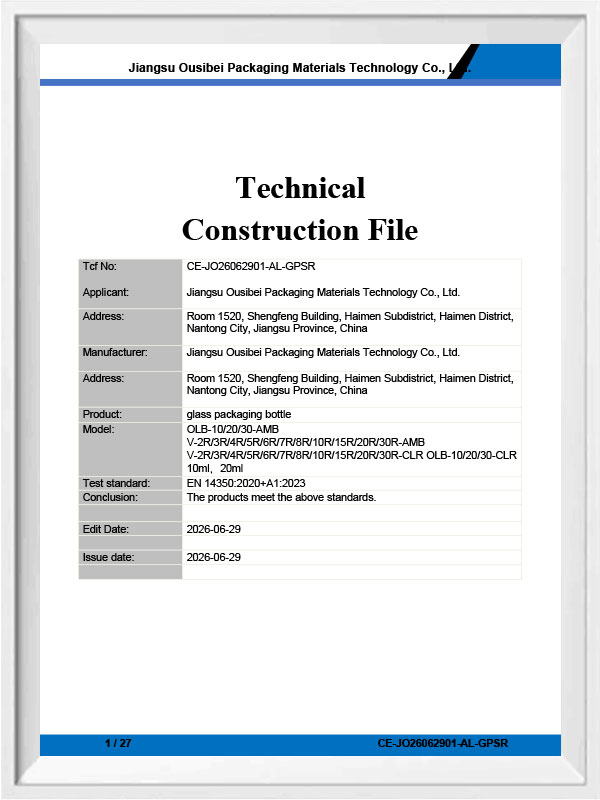
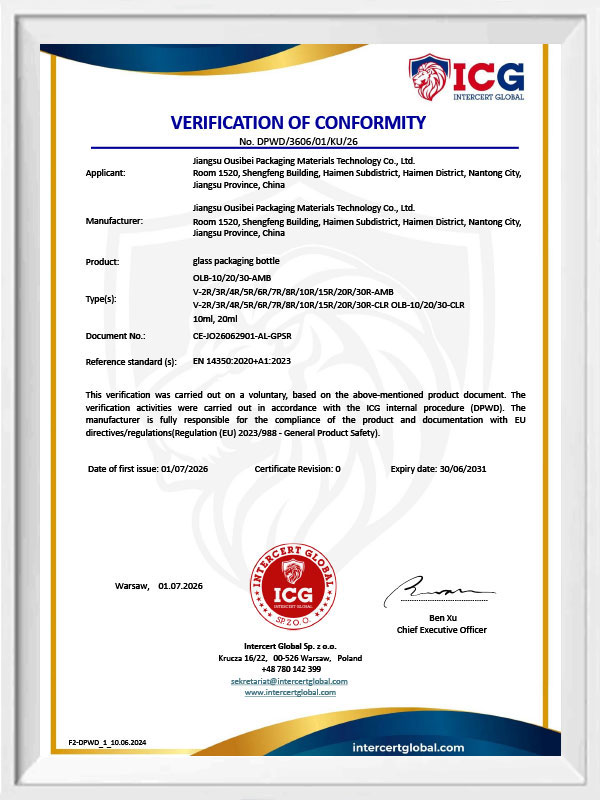
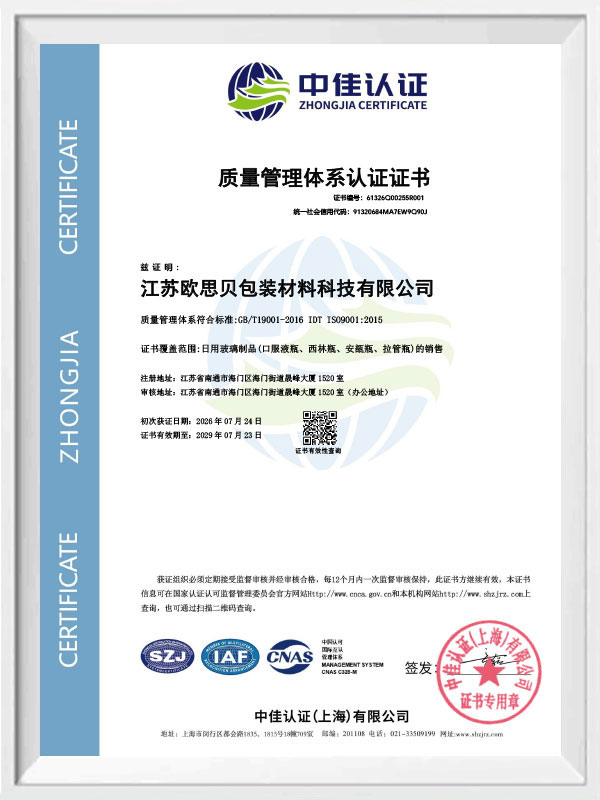
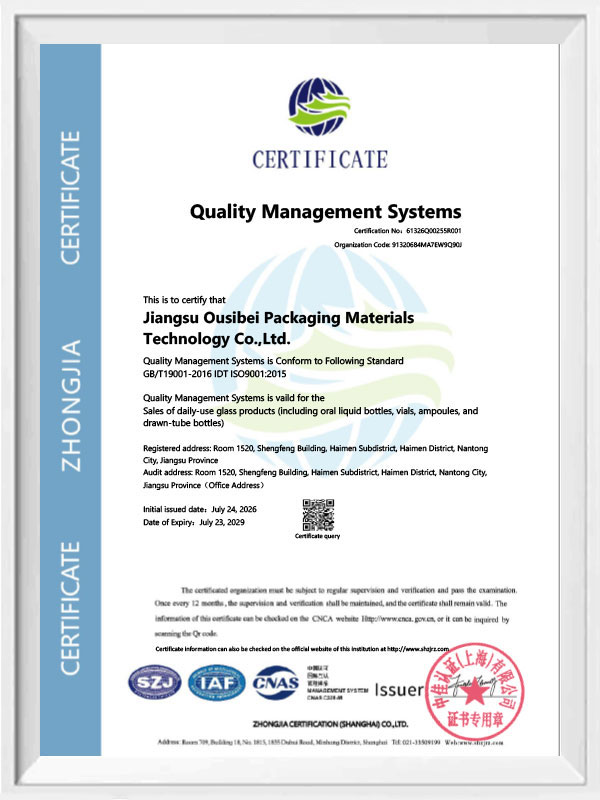
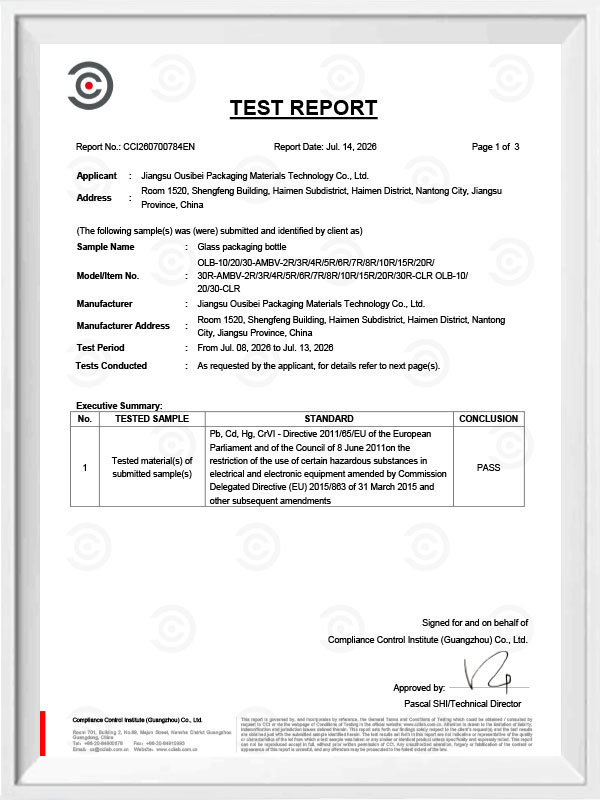
The ampoule series is CE certified, RoHS tested and produced under an ISO 9001 quality system. Inspection is performed after each process, and finished products are 100% inspected against customer requirements and the applicable international standard. Testing reports are issued with sample and production batches.
Acceptance criteria are agreed before the first production run: dimensional tolerances, breakpoint behaviour, cosmetic defect limits, sealing integrity and packing format. Where a customer works to an internal specification, that document becomes the inspection basis.
Packing, Handling and Use
Qualified ampoules are arranged by vacuum suction arms and packed as bare bottles in paper boxes and export cartons, then palletised, which suits pharmaceutical customers who fill and seal in house. Defective glass from forming is crushed and returned to the remelting workshop.
Because the container is opened by snapping the neck, the neck should be kept away from the face and skin during opening, and the contents used immediately once opened. The ampoule is single-use and is not intended for storage or reuse after breaking.
Information We Use to Configure Your Solution
Our proposal is built on the working point, the fill material and the production target. The following inputs let us fix capacity, glass grade, neck geometry and packing without a second round of questions.
| Input | Why We Need It |
|---|---|
| Nominal fill volume and fill range | Sets body capacity and headspace for melt sealing |
| Formulation type and light sensitivity | Determines clear, amber or blue glass |
| Sterilisation method and temperature | Confirms glass grade and annealing profile |
| Filling and sealing line interface | Matches mouth dimensions and neck geometry to the machine |
| Trial quantity, annual volume and delivery schedule | Plans sampling, moulds and production slots |
| Packing format and labelling requirements | Defines box, carton and pallet configuration |
Frequently Asked Questions
Which capacities do you produce in curved neck ampoules?
Our standard series covers 2 mL, 3 mL, 5 mL, 8 mL, 10 mL, 15 mL, 20 mL and 30 mL. Custom capacity development is available from 1 mL to 100 mL when the neck and body geometry allow it.
How do I choose between clear, amber and blue glass?
Clear glass is used where the solution must be visually inspected for impurities or sediment. Amber glass blocks UV and suits light-sensitive injectables such as peptides and vitamin C. Blue glass gives the highest shielding of the three and is used for highly light-sensitive actives and premium formulations.
Are the ampoules compatible with automated filling lines?
Yes. The series is designed for aseptic filling and melt-sealing processes, and mouth dimensions are held to ±0.03 mm so the container interfaces consistently with automated equipment. We confirm the line interface during configuration.
What quality documentation accompanies a batch?
Production runs under an ISO 9001 quality system, with CE certification and RoHS testing for the ampoule series. Inspection data from the forming and final stations is stored for traceability, and testing reports are issued with sample and production batches.
Can you reproduce an ampoule we already have qualified?
We produce to drawings or physical samples with accurate reproduction, and we also support joint development based on your packaging need, target market and application. Sampling is fast, and mass production follows customer confirmation of the sample.
How are the ampoules packed for export?
Qualified bottles are arranged automatically and packed as bare bottles in paper boxes and export cartons, then palletised. Each carton carries a traceability QR code recording the forming machine, batch number and production time.
Quick Links
Product
Contact Information
- Add: Suite 1520, Sucheng Building, 233 Ruijiang Road, Haimen District, Nantong City, Jiangsu Province, China
- Tel: +86-18795716669
-
Email:
manager@ausbaypkg.com sales@ausbaypkg.com export@ausbaypkg.com
Contact Us
Copyright by Jiangsu Ousibei Packaging Material Technology Co., Ltd. Rights
Reserved.
 Custom Curved neck ampoule Suppliers
