
 English
 русский
 Español
 عربى

Oral liquid bottle Manufacturers
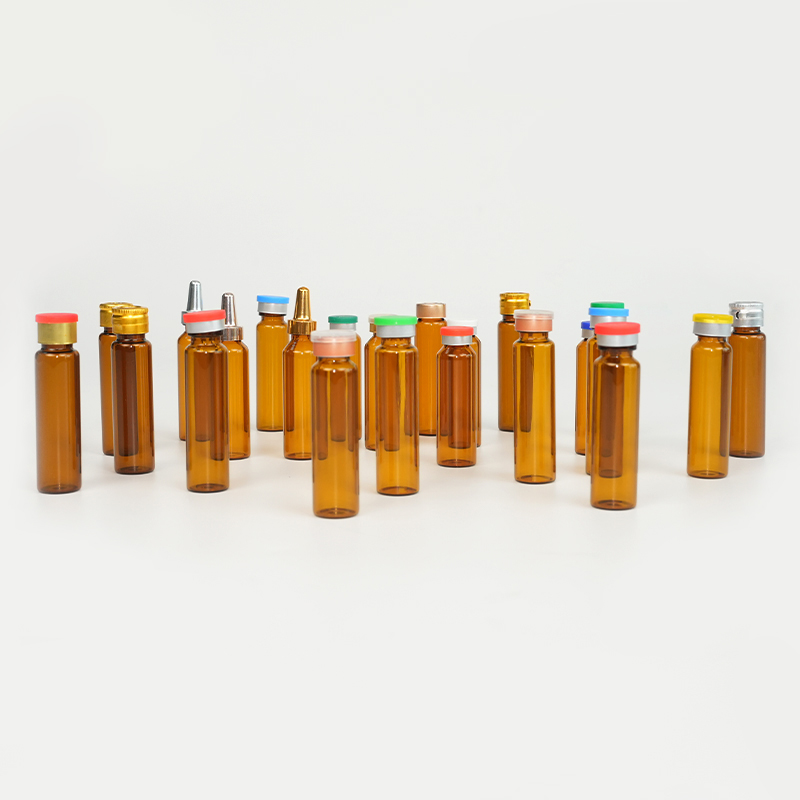
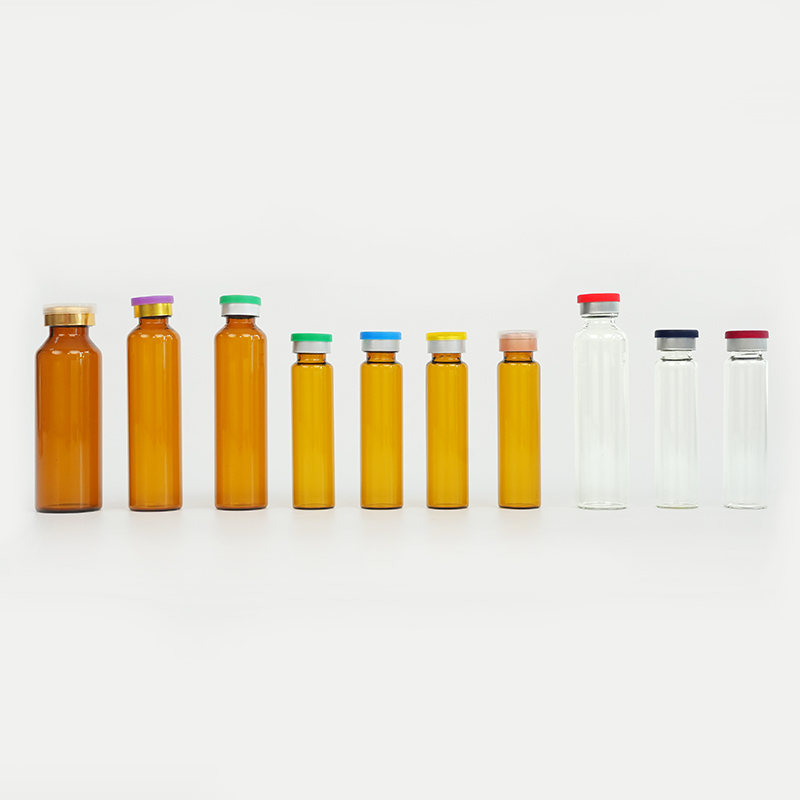
Oral liquid bottles are primarily used for the aseptic packaging and long-term storage of oral medications, herbal syrups, nutritional supplements, and functional beverages; they are the most commonly used specialized glass packaging containers in the pharmaceutical and healthcare sectors.
Primary Applications: Suitable for filling, sealing, storage, and transport of Traditional Chinese Medicine (TCM) oral liquids, vitamin supplements, botanical extracts, pediatric oral formulations, and portable functional drinks.
Material Characteristics: Manufactured from soda-lime glass or neutral borosilicate glass (available in clear or amber variants). They offer excellent chemical stability, do not react with acidic or mildly alkaline liquids, release no harmful substances, and comply with safety standards for packaging materials.
Structural Design: Features a standard crimp-finish neck compatible with aluminum crimp caps and composite tamper-evident caps; the neck finish is flat for a tight seal. The bottle body features uniform wall thickness and seamless, one-piece construction, making it suitable for high-temperature steam sterilization processes.
Key Advantages: These bottles offer superior barrier properties; amber versions block UV light, delaying the oxidation and degradation of contents. They exhibit excellent temperature resistance, are compatible with downstream sterilization processes, and provide reliable, leak-proof sealing that significantly extends product shelf life.
Precautions: Bottles must undergo washing, drying, and sterilization prior to filling. Amber bottles are recommended for light-sensitive formulations; storage should be in a cool, well-ventilated area away from direct sunlight.
About Ousibei
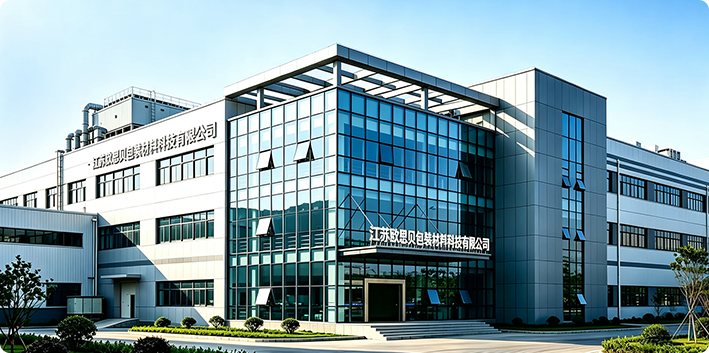
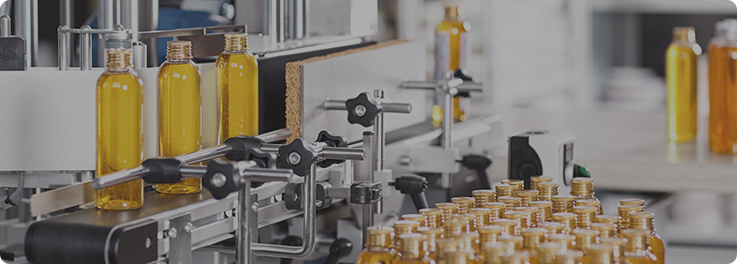
As China Liquid Medicine Bottle Manufacturers and Oral liquid bottle Suppliers, Ousibei specializes in the research, development, and production of glass
packaging materials, supported by a complete production system and quality control process.
 Read More


News
-
Process Notes · Glass Packaging How Are Glass Vials Made? From Molten Batch to a Finished Vial Two forming routes, one shared discipline: melt, shape, anneal, inspect. Here is what really happens between a bag of sand and the vial standing on your filling line — and where the s...
READ MORE -
Small Vials, Serious Protection: A Practical Guide to 1ml, 2ml and 3ml Essential Oil Glass Vials The smallest formats often carry the heaviest expectations. Here is what we have learned about choosing, filling and presenting tiny essential oil vials that still feel considered. ...
READ MORE -
Packaging notes from the production floor Glass Vials for Antibiotics: A Practical Guide to Selection and Supply Antibiotic packaging leaves little room for guesswork. We walk through the vial formats, glass choices, closure decisions, and fill-finish details that help keep a s...
READ MORE
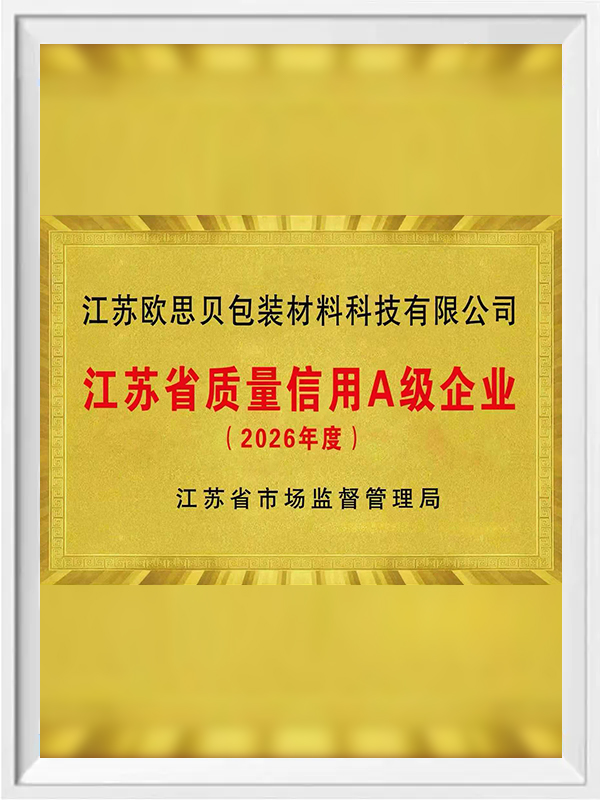
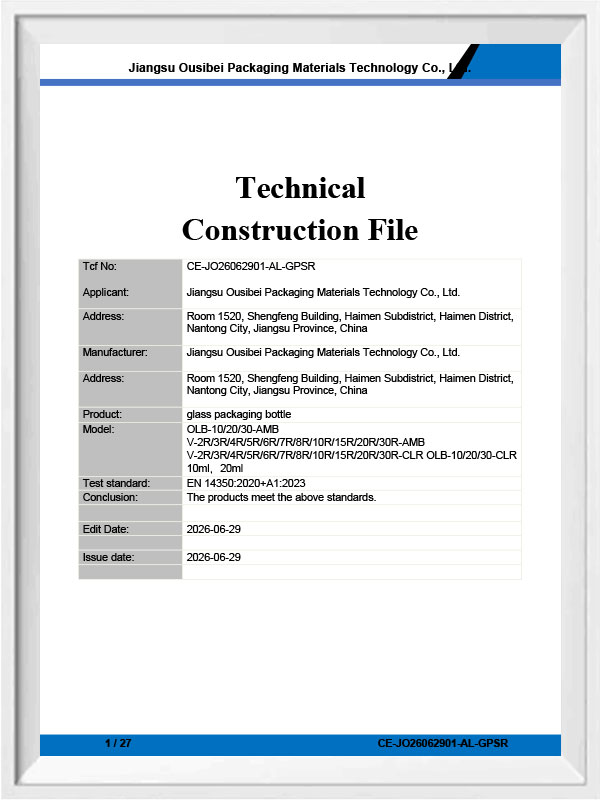
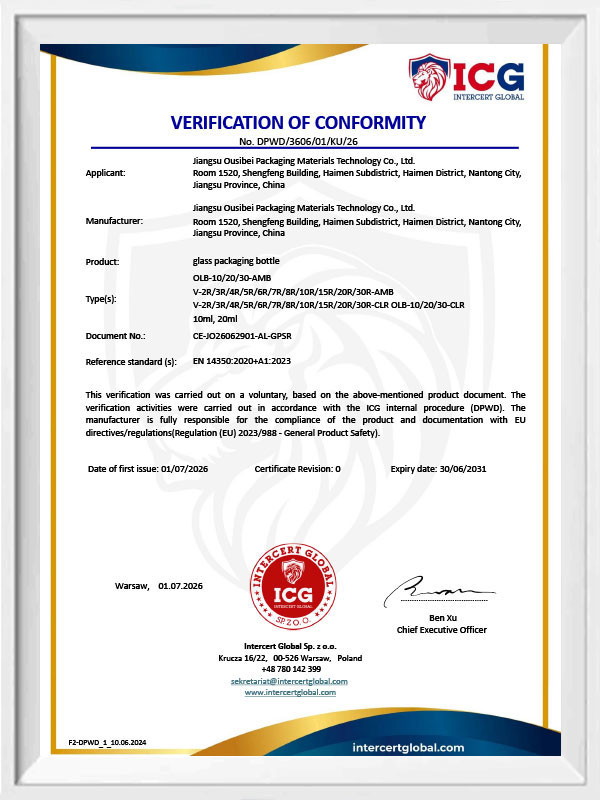
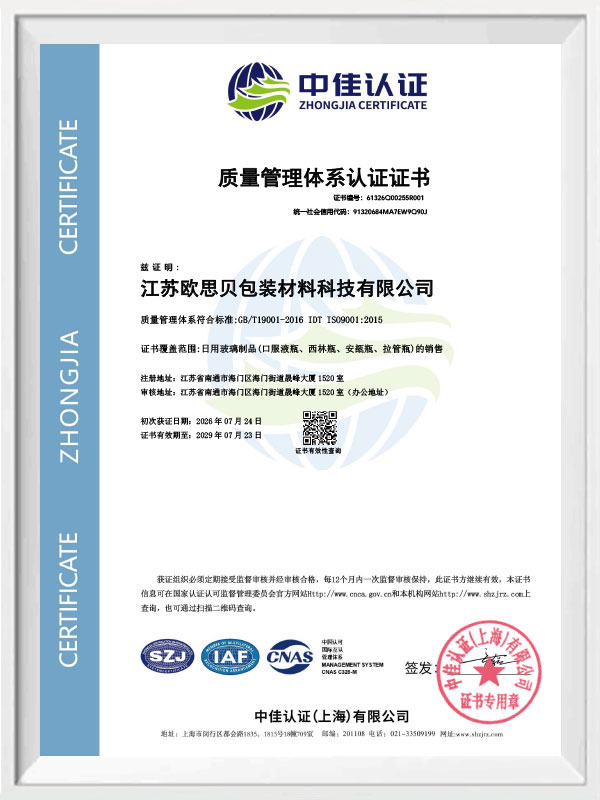
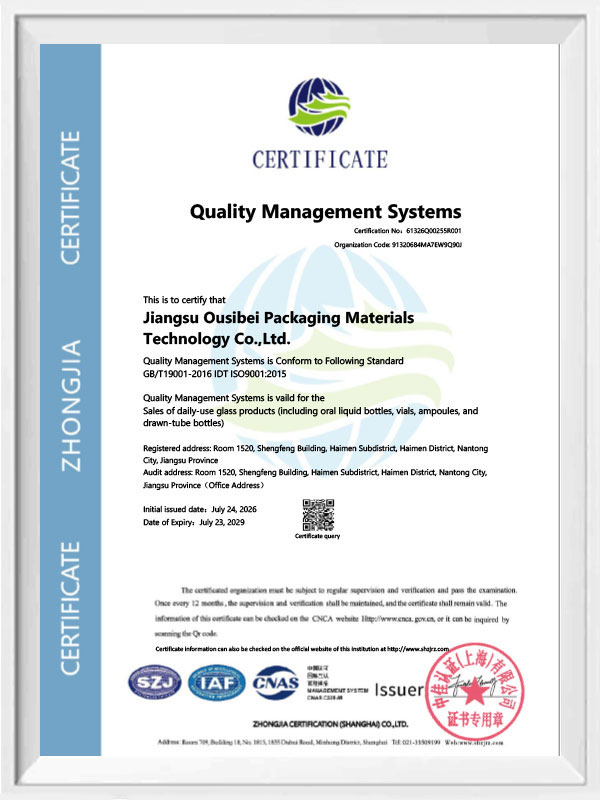
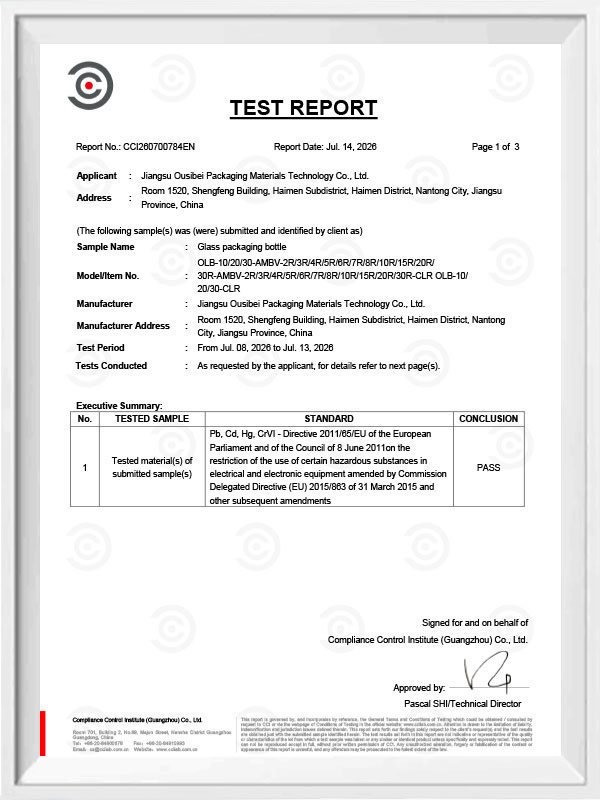
Certificate Of Honor
Industry Knowledge Expansion
Jiangsu Ousibei Packaging Material Technology Co., Ltd. is a China Oral liquid bottle manufacturer producing tubular drawn-glass containers for oral medications, herbal syrups, nutritional supplements and functional beverages. Our range covers crimp-finish and screw-finish bottles in soda-lime and neutral borosilicate glass, supplied clear or amber, with capacities from 10 ml to 30 ml in the standard oral liquid series and development capability from 1 ml to 100 ml.
Twenty dual production lines run in parallel, each covering glass tube forming, bottle forming, annealing, inspection, packing and warehousing without intermediate outsourcing. That structure supports fast sampling, flexible customization and stable mass production for pharmaceutical, nutraceutical, animal health and laboratory sample packaging projects.
Where Our Oral Liquid Bottles Fit
Oral liquid bottles are the standard primary container for aseptic packaging and long-term storage of liquid formulations. Our bottles are used for Traditional Chinese Medicine oral liquids, vitamin and mineral syrups, pediatric formulations, botanical extracts, peptide and collagen drinks, probiotic liquids, liquid enzymes and portable functional beverages.
- Pharmaceutical: colorless TCM mixtures, standard oral syrups, light-sensitive vitamin C syrups and photosensitive herbal extracts.
- Nutraceutical: collagen peptide drinks, protein peptide oral liquids, children's peptide drinks, ginseng and goji liquids, syrup-based health products.
- Personal care: non-injectable oral beauty essences, plant concentrates and transparent hydrating formulations.
- Laboratory: colorless reagents, photosensitive test solutions, aliquoting and retention samples.
Our Oral Liquid Bottle Range
Two product families cover the majority of oral liquid filling lines. Both share the same tubular forming platform, so neck geometry, wall thickness and bottom concavity are controlled to the same process window.
| Product | Glass | Finish | Typical Sizes | Application Fit |
|---|---|---|---|---|
| Amber glass oral liquid vial with crimp finish | Borosilicate, amber | Crimp neck | 10 ml 18×61.5 / 18×65 / 18×68 / 18×70; 20 ml 22×83; 30 ml 27×79 / 26×87 | Light-sensitive peptides, vitamin C syrups, TCM extracts |
| Clear glass oral liquid vial with crimp finish | Borosilicate, clear | Crimp neck | 10 ml 18×61.5 / 18×65 / 18×68 / 18×70; 20 ml 22×83; 30 ml 27×79 / 26×87 | Colorless syrups, amino acid and probiotic drinks, reagents |
| Screw-cap oral liquid bottle | Soda-lime or borosilicate | Screw neck, re-closable | Multi-specification, 1 ml to 100 ml development | Multi-dose syrups, nutraceutical liquids, travel and sample sizes |
| Tubular vial | Neutral borosilicate, clear or amber | Crimp or vial-type neck | 2 ml / 5 ml / 10 ml / 20 ml / 30 ml | Small-volume oral dosing, sample retention, laboratory aliquots |
Adjacent glass families share the same forming and inspection platform: Freeze Dried Vials for lyophilized formulations, Curved neck ampoule for single-use sterile filling, and Essential oil bottle for light-shielding aromatherapy packaging.
Material Selection and Chemical Stability
We form oral liquid bottles from soda-lime glass and neutral borosilicate glass. Soda-lime suits standard syrups and general oral liquids; neutral borosilicate is specified where acidic or mildly alkaline formulations, high-temperature sterilization or low metal leaching are required.
- Clear glass: full transparency for visual inspection of appearance, sediment and impurities; crisp screen printing and hot-stamping results.
- Amber glass: blocks UV light to delay oxidation and degradation of light-sensitive actives such as peptides and vitamin C.
- Surface quality: smooth, uniform walls that accept screen printing, hot stamping and spray coating for brand identification.
Critical Specifications and Forming Accuracy
Neck finish geometry drives sealing performance and filling-line compatibility, so it receives the tightest control in our process. The bottle mouth dimensional tolerance reaches ±0.03 mm, which keeps aluminum crimp caps and composite tamper-evident caps seated correctly through sterilization and transport.
- Bottle height, outer diameter, inner mouth diameter, wall thickness and bottom concavity are measured at the preliminary forming inspection station.
- High-speed vision cameras reject out-of-tolerance bottles and store inspection data in real time for batch traceability.
- Uniform wall thickness supports fully automated filling lines and reduces the risk of bottle jams.
- Seamless one-piece construction with a flat neck finish for a tight, leak-proof seal, including inverted transport.
Capacity, Throughput and Production Structure
Our forming platform is built for volume pharmaceutical packaging. A single forming machine runs at 120 pcs/min; with 20 dual lines operating at full load for 20 hours, daily capacity reaches 2.88 million pcs, equivalent to 864 million glass bottles per year across 300 production days.
| Line Group | Lines | Product | Sizes |
|---|---|---|---|
| Soda-lime oral liquid lines | 10 full-process lines | Amber oral liquid bottles | 10 ml / 20 ml / 30 ml / 50 ml |
| Neutral borosilicate tubular lines | 10 full-process lines | Tubular vials, clear and amber | 2 ml / 5 ml / 10 ml / 20 ml / 30 ml |
Each line runs from glass tube loading through forming, annealing, inspection, packing and warehousing. No intermediate outsourcing or external transfer is required, which keeps dimensional consistency and traceability inside one production chain.
Annealing and Defect Control
After forming, bottles pass through a continuous mesh-belt annealing furnace with segmented temperature control, holding at 580–620 °C for 2–3 hours before a slow gradient cool. This relieves internal stress from high-temperature forming and prevents cracking during downstream washing or sterilization. The furnace is fully enclosed with hot-air circulation, so clean hot air protects the bottle surface and limits dust contamination.
The final inspection machine performs visual inspection for 77 defect types, including cracks, bubbles, black spots, stones, chipped mouths, uneven bottoms and loose glass particles. Defective bottles are automatically separated, and all cullet is crushed and returned to the remelting workshop.
Configuration, Closures and Line Integration
We configure bottle structure and dimensions around the filling line and closure system rather than supplying a bottle in isolation. Standard neck finishes accept aluminum crimp caps and composite tamper-evident caps; screw-neck versions provide re-closable multi-dose formats.
- Capacity development: 1 ml to 100 ml for small-volume filling, single-use packaging, oral liquids, samples and concentrates.
- Structure options: screw neck, vial-type neck, tubular glass, straight body, special-shaped body, curved neck and thick-wall designs.
- Materials: soda-lime, low borosilicate, medium borosilicate and high borosilicate glass.
- Surface finishing: screen printing, hot stamping and spray coating for brand recognition.
- Compatibility design: bottle structure and size matched to filling equipment and closure systems.
For customers with mature products, we reproduce existing bottles from drawings or samples. For new programs, we develop the structure jointly against the target market and application scenario.
Packaging, Delivery and Documentation
Qualified bottles are arranged by vacuum suction robotic arms and conveyed to the automatic carton packaging machine. The bare-bottle packaging unit completes counting, paper box packing, box sealing, outer carton labeling and palletizing. Each carton carries a unique traceability QR code recording the forming machine, batch number and production time.
- Bare-bottle finished packaging for export pharmaceutical packaging customers.
- Batch-level traceability from forming machine through to carton.
- Testing reports and material documentation issued with production batches.
- Washing, drying and sterilization before filling remain the customer's process step; bottles are supplied ready for that sequence.
Information We Use to Configure Your Solution
Our proposal is based on the working point, material and production target. The following inputs let us confirm capacity, neck finish, glass type and packaging scope without repeated revision rounds.
| Input | What It Determines |
|---|---|
| Fill volume and headspace | Bottle capacity, body diameter and overall height |
| Formulation pH and light sensitivity | Soda-lime versus borosilicate; clear versus amber glass |
| Closure type and capping equipment | Neck finish geometry and mouth tolerance |
| Filling line speed and format | Wall thickness uniformity, body straightness, carton format |
| Sterilization method and temperature | Glass type and annealing process window |
| Branding and decoration requirements | Screen printing, hot stamping or spray coating |
| Annual volume and launch schedule | Sampling plan, mold allocation and production scheduling |
Custom Development Process
- Technical requirement discussion covering formulation, filling and closure.
- Material and structure proposal with capacity and neck finish options.
- Mold design and development.
- Sample production and testing.
- Client confirmation of samples and specifications.
- Mass production and delivery.
Standard products can be ordered at lower MOQ for trial runs. Customized products are evaluated on structure, mold complexity, material requirements and production process. Our technical R&D, production management and quality control team works on glass forming process development, structural design and product consistency control.
Frequently Asked Questions
What sizes of oral liquid bottles does Ousibei produce?
Our standard oral liquid series covers 10 ml, 20 ml and 30 ml in crimp-finish amber and clear borosilicate, with 10 ml variants at 18×61.5, 18×65, 18×68 and 18×70, 20 ml at 22×83, and 30 ml at 27×79 or 26×87. Custom development supports 1 ml to 100 ml.
Should I choose soda-lime or borosilicate glass?
Soda-lime glass suits standard syrups and general oral liquids. Neutral borosilicate is specified for acidic or mildly alkaline formulations, high-temperature sterilization and applications where low metal leaching matters. We confirm the grade against your formulation pH and sterilization method.
How is the neck finish controlled for crimp sealing?
The bottle mouth dimensional tolerance reaches ±0.03 mm, and the flat neck finish is formed in one step with the body and bottom. This keeps aluminum crimp caps and composite tamper-evident caps seated correctly and prevents leakage even when bottles are inverted.
Can you match an existing bottle from a drawing or sample?
Yes. For mature products we produce according to customer drawings or samples with accurate reproduction. For new programs we develop capacity, structure, material and surface finishing jointly, then confirm through sample production and testing before mass production.
What packaging and traceability do you provide?
Qualified bottles are packed as bare-bottle finished goods through automatic counting, paper box packing, sealing, carton labeling and palletizing. Each carton carries a unique traceability QR code recording the forming machine, batch number and production time.
Do you support screen printing and custom decoration?
We provide screen printing, hot stamping and spray coating. Clear glass gives crisp print and hot-stamp results, while amber glass supports light-shielding decoration for premium supplement and oral concentrate lines.
Quick Links
Product
Contact Information
- Add: Suite 1520, Sucheng Building, 233 Ruijiang Road, Haimen District, Nantong City, Jiangsu Province, China
- Tel: +86-18795716669
-
Email:
manager@ausbaypkg.com sales@ausbaypkg.com export@ausbaypkg.com
Contact Us
Copyright by Jiangsu Ousibei Packaging Material Technology Co., Ltd. Rights
Reserved.
 Custom Liquid Medicine Bottle Suppliers
