
 English
 русский
 Español
 عربى

Glass Vials for Antibiotics: A Practical Guide to Selection and Supply
Packaging notes from the production floor
Glass Vials for Antibiotics: A Practical Guide to Selection and Supply
Antibiotic packaging leaves little room for guesswork. We walk through the vial formats, glass choices, closure decisions, and fill-finish details that help keep a sterile product stable and a supply chain calm.
Why glass still earns its place in antibiotic packaging
After more than two decades of shaping glass for healthcare and laboratory customers, we have learned that antibiotic vials are rarely chosen on appearance alone. The container has to protect a sensitive formulation, survive washing and sterilization, fit a filling line, and still make sense at commercial scale.
Glass offers a combination that is hard to match: chemical inertness, a strong barrier, dimensional stability, and a surface that can be cleaned and inspected with confidence. For many antibiotic products, the real question is not whether to use glass, but which glass format and specification will do the job without adding unnecessary cost or risk.
“A good vial is quiet. It does not ask the filling line to compensate for it, and it does not surprise the quality team after the batch is sealed.”
Material choice still deserves a deliberate review. If you are comparing glass with plastic for a liquid medicine bottle, our material comparison notes may help frame the trade-offs. For antibiotics, however, the decision usually comes back to barrier performance, closure integrity, and the ability to validate the container across its life cycle.
The four vial decisions that matter most
When a customer asks us to quote glass vials for antibiotics, we try to slow the conversation down just enough to get the fundamentals right. Most issues we see later can be traced back to one of four decisions.
- Dosage form. Is the antibiotic a powder for reconstitution, a ready-to-use liquid, or a single-dose solution? The answer narrows the vial format before price enters the room.
- Glass specification. The formulation, pH, storage conditions, and sterilization route should define the glass grade and color, not a generic catalogue default.
- Closure system. Stopper, crimp, cap, and liner work as one system. A vial is only as reliable as the seal it accepts.
- Fill-finish fit. Neck finish, vial height, wall uniformity, and opening diameter all affect filling speed, stopper placement, and inspection.
A quick comparison of antibiotic vial formats
The table below is not a substitute for compatibility testing, but it is a useful starting point for the internal conversation between packaging, formulation, and production teams.
| Format | Common role | Closure or seal | What to confirm |
|---|---|---|---|
| Freeze-dried vial | Powder antibiotics and lyophilized formulations | Rubber stopper plus aluminum crimp | Neck finish, stopper compatibility, freeze-drying cycle |
| Tubular injection vial | Liquid or powder injection | Rubber stopper plus crimp seal | Wall uniformity, dimensional tolerance, washing and depyrogenation |
| Curved-neck ampoule | Single-dose liquid injection | Flame-sealed glass | Opening performance, tip geometry, filling line fit |
| Screw-cap oral liquid bottle | Oral antibiotic suspensions | Screw cap with liner | Closure torque, liner compatibility, dose accuracy |
Freeze-dried vials: the workhorse for powder antibiotics
Lyophilized antibiotics put the vial through a demanding cycle: freezing, vacuum, sublimation, and final sealing. The container needs consistent dimensions so that shelves, stoppers, and automated loading systems behave predictably. It also needs a clean interior and a neck finish that supports reliable stopper seating after the drying cycle.
For powder antibiotics, we usually begin with the fill volume, cake height, and stopper type, then work back to the vial drawing. Amber glass is often specified where light sensitivity is a concern; clear glass can make visual inspection easier. The right answer depends on the formulation and the inspection method, not on a default preference.
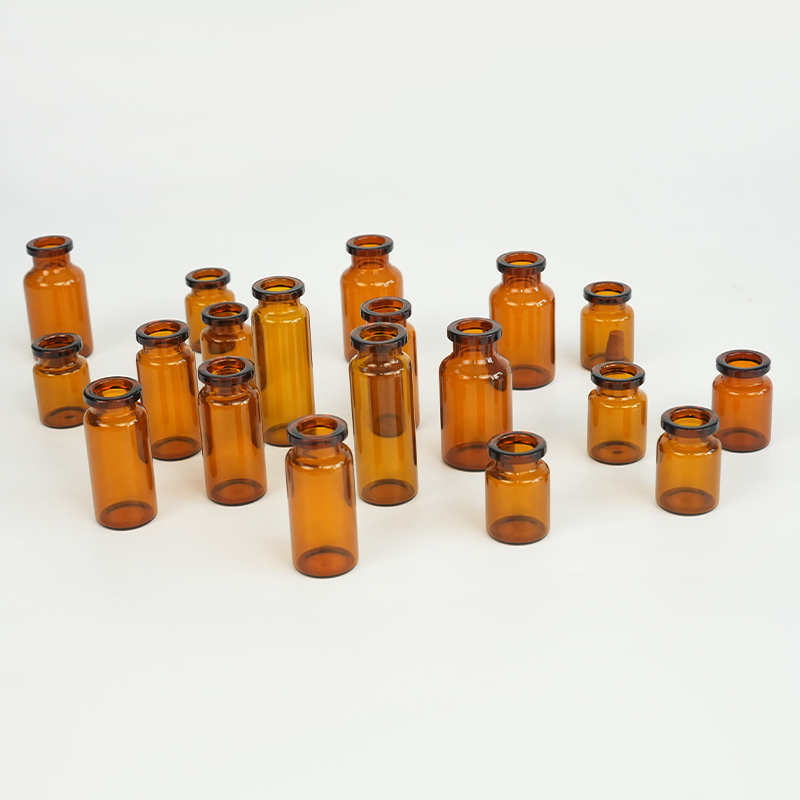 Freeze-Dried Glass Vials for Injectable PowdersBrowse clear, amber, and blue borosilicate vials in 2–30 ml, suited to lyophilized powders and injectable antibiotic filling lines.View Product →
Tubular vials: precision for liquid injection
Tubular glass vials are common in injectable antibiotic lines because they offer good dimensional control and a clean, uniform appearance. That precision matters when vials move at speed through washing, sterilization, filling, and stoppering. A vial that is slightly out of tolerance can cause a stopped line, a rejected batch, or a subtle seal defect that only appears during stability testing.
When reviewing tubular vials, we look at wall thickness, bottom shape, neck geometry, and cosmetic quality together. These details are not separate line items; they determine how the vial behaves in the customer's process. If a filling line is already validated, the best starting point is often a close match to the existing drawing, followed by a careful sample run.
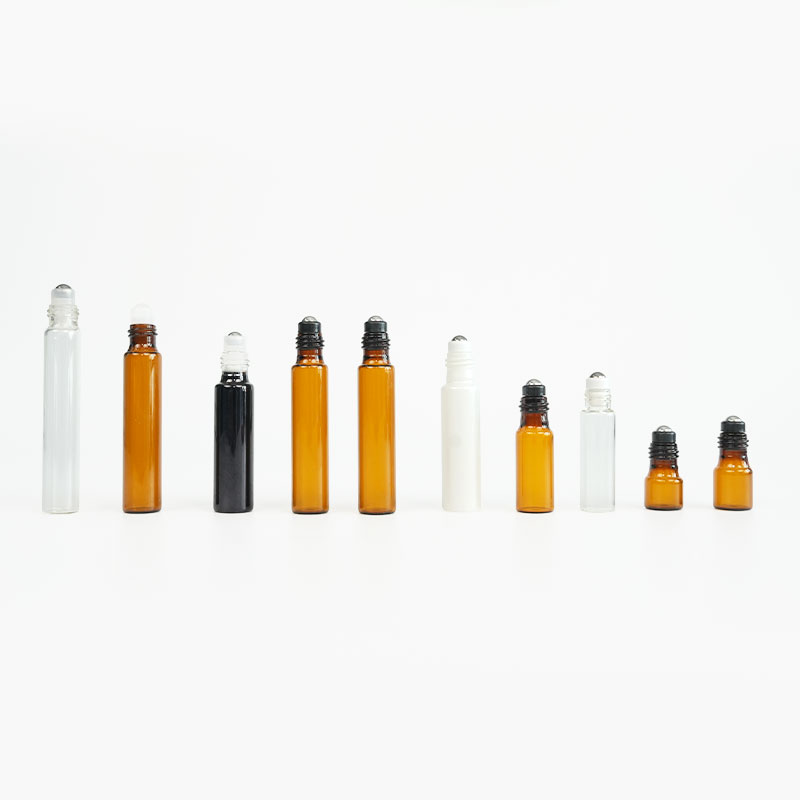
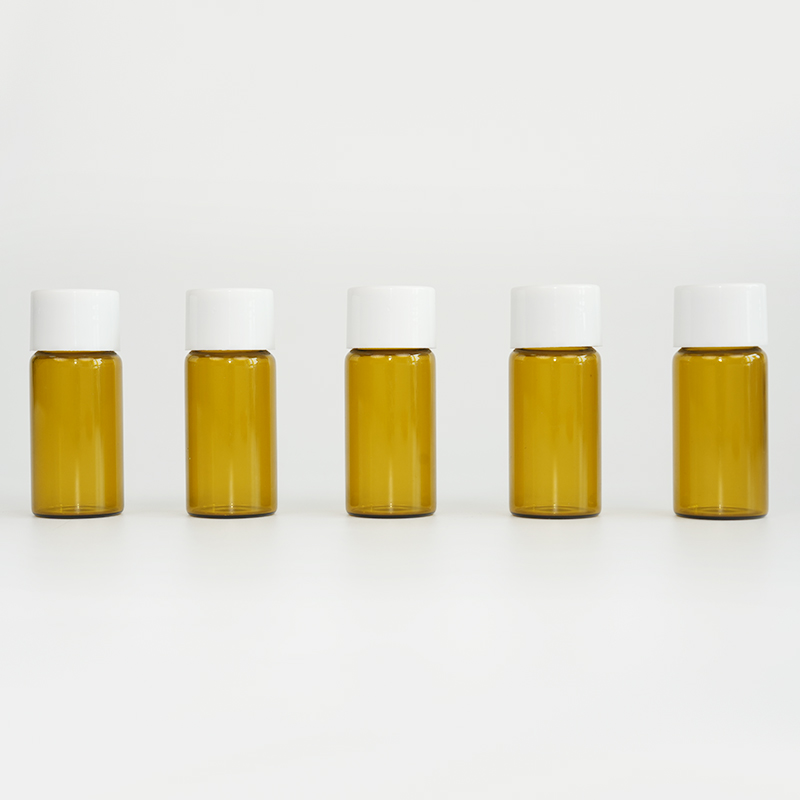 Tubular Glass Vials and Roll-On BottlesReview clear and amber drawn-glass vials plus roll-on bottles for liquids, serums, reagents, and fragrance, with crimp or screw-neck closure options.View Product →
Curved-neck ampoules: single-dose simplicity
Ampoules remain a practical choice for single-dose antibiotic liquids where the product is sealed by flame and opened at the point of use. The curved neck influences how the ampoule is filled, sealed, opened, and emptied. A well-formed neck helps the user break the ampoule cleanly, while a poorly controlled tip can create glass particles or a frustrating opening experience.
Because ampoules are sealed by melting the glass, the filling and sealing process must be tuned to the glass specification. We discuss this openly with customers because the container and the machine are partners in the same operation. Our notes on lyophilized vials and curved-neck ampoules go deeper into the fill-finish side of that relationship.
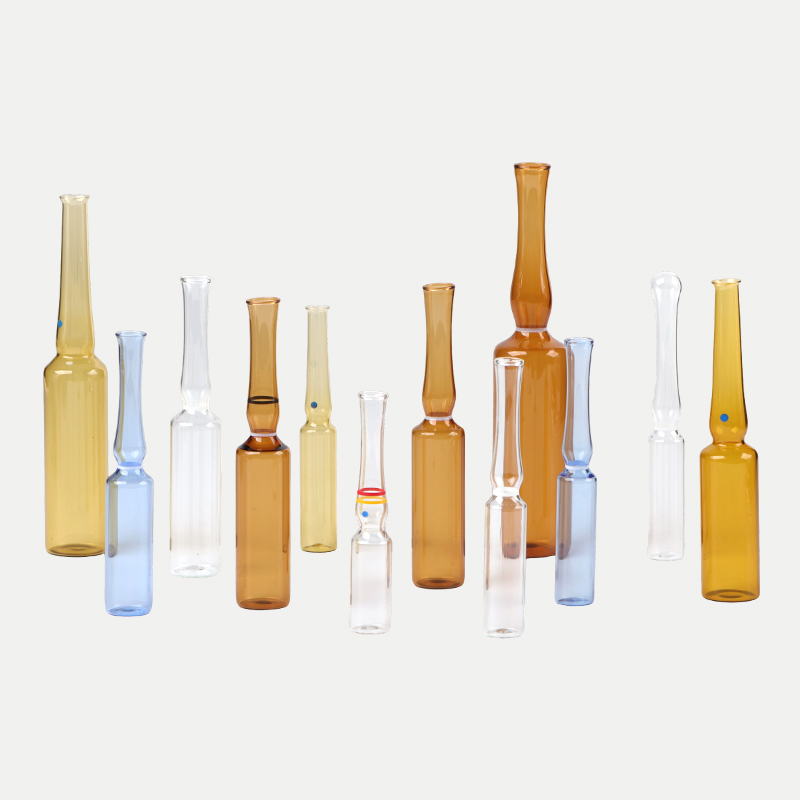 Custom Curved-Neck Glass Ampoules for Sterile InjectionsSingle-piece borosilicate ampoules with easy-snap necks and melt sealing, available in clear, amber, and blue for injectables, serums, and sensitive reagents.View Product →
Closures, washing, and fill-finish: where good vials become good packaging
A glass vial does not protect an antibiotic on its own. The closure system completes the package. Stopper formulation, flange shape, crimp dimensions, and cap material all need to be reviewed together. A stopper that looks compatible on paper can still behave differently after steam sterilization or during high-speed placement.
Washing and depyrogenation also deserve early attention. The vial must tolerate the cleaning route without cosmetic or dimensional changes that affect filling. If the vial is washed in bulk, confirm that the tray pattern and water flow reach the interior consistently. If it is supplied ready-to-use, agree on the packaging format and the transfer step into the aseptic area.
Quality checks we would not skip
Our experience has taught us that quality is built through routine checks, not one dramatic final inspection. For antibiotic vials, the following checks are worth agreeing on before the first commercial batch.
- Dimensional inspection against the approved drawing, including neck finish and height.
- Visual inspection for cracks, stones, bubbles, and interior contamination.
- Closure fit and seal integrity with the nominated stopper and crimp.
- Washing and depyrogenation trial results under the intended process conditions.
- Packaging and transit trials that reflect the real route to the filling site.
Common red flags when sourcing glass vials for antibiotics
Most sourcing problems are visible before the purchase order is placed. The challenge is noticing them while there is still time to adjust the drawing or the specification.
- A vial drawing that has no tolerance for neck finish or wall thickness.
- A quotation that does not name the glass grade, color, or closure interface.
- Samples that are not produced on the same line or process as the commercial batch.
- No discussion of washing, sterilization, or depyrogenation before approval.
- Delivery dates that ignore tooling, sample approval, and transit time.
A calm supply chain starts with the right questions
Glass vials for antibiotics are a small part of the finished pack, but they influence stability, sterility, line performance, and patient safety. The most reliable projects we see are not the ones with the longest specification sheet. They are the ones where the dosage form, glass specification, closure system, and fill-finish process were discussed together from the beginning.
As a glass packaging manufacturer with more than 20 years of forming, manufacturing, and quality-control experience, we prefer that conversation to be practical. Send us the formulation context, the filling line details, and the target pack appearance. We will help translate them into a vial drawing, a sample plan, and a production route that your team can review with confidence.
Start with the product, not the catalogue. That is usually the shortest path to a glass vial that performs quietly, batch after batch.
Interested in cooperation or have questions?
 Read More

- Add: Suite 1520, Sucheng Building, 233 Ruijiang Road, Haimen District, Nantong City, Jiangsu Province, China
- Tel: +86-18795716669
- Whatsapp: 8618921660015
-
Email:
manager@ausbaypkg.com sales@ausbaypkg.com export@ausbaypkg.com
Copyright by Jiangsu Ousibei Packaging Material Technology Co., Ltd. Rights
Reserved.
 OEM/ODM Empty Perfume Vials Manufacturers
