
 English
 русский
 Español
 عربى
عربى
Freeze Dried Vials Manufacturers
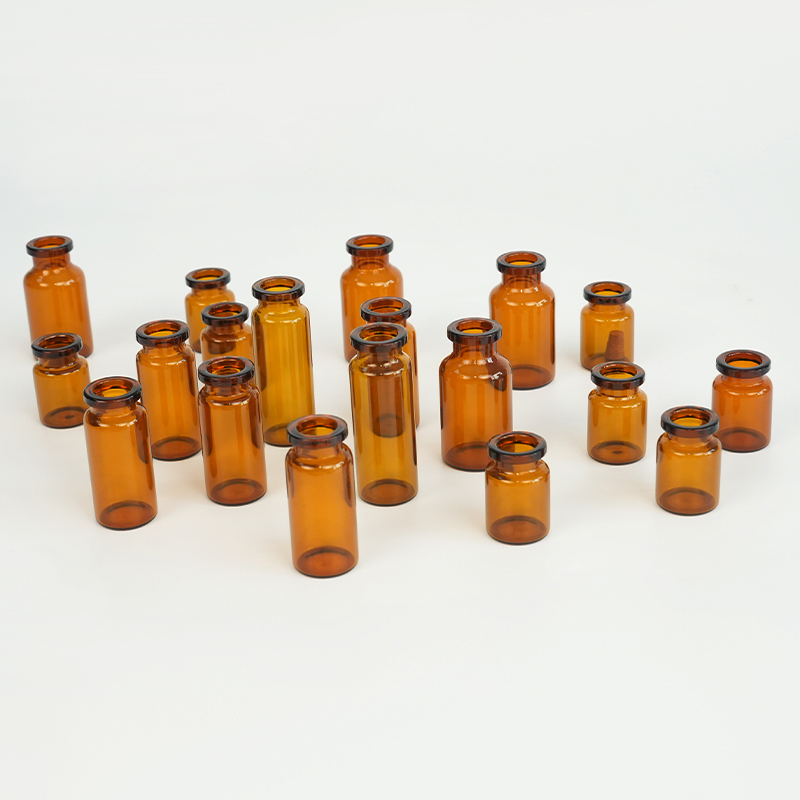
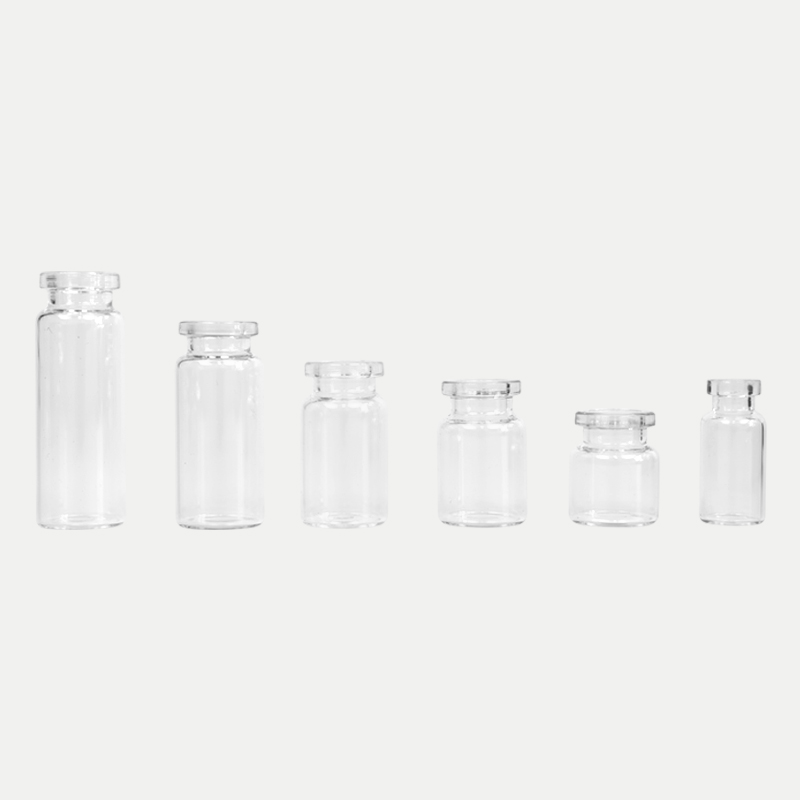
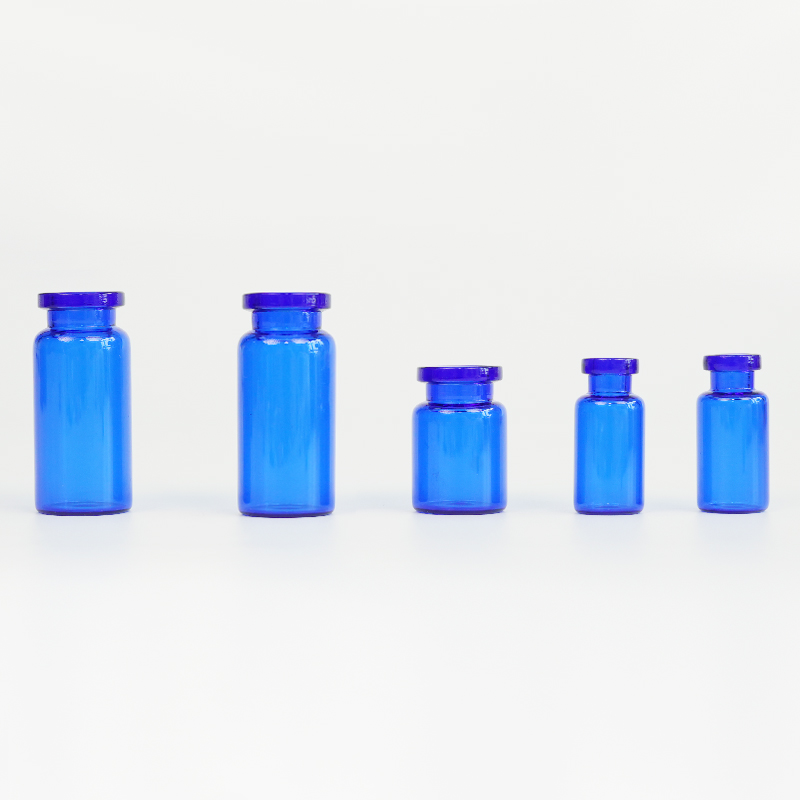
Vials are glass containers with a crimp-neck design, specifically developed for lyophilized (freeze-dried) powders, injectable powders, and biological reagents. Widely used in biopharmaceuticals, medical aesthetics, and laboratory research, they serve as the primary packaging solution for sterile powders.
Primary Applications: Suitable for the dispensing, freeze-drying, and sealed storage of antibiotic powders, medical-grade lyophilized powders, biological experimental powders, and highly active micro-reagents.
Material Characteristics: Made from neutral borosilicate glass with a low coefficient of thermal expansion, offering excellent thermal stability. They withstand the ultra-low temperatures of freeze-drying and high-temperature, high-pressure sterilization (121°C), while resisting breakage caused by thermal shock.
Structural Design: Features a standard straight-body crimp-neck design with precise dimensions, compatible with butyl rubber stoppers and aluminum-plastic flip-off caps. The smooth interior walls eliminate "dead zones," facilitating thorough washing and sterilization without residue, thus meeting sterile production requirements.
Key Advantages: Superior vacuum sealing performance effectively blocks air, moisture, and microorganisms, preventing highly active powders from losing potency due to moisture exposure. The glass offers excellent clarity for visual inspection of the contents and complies with international standards for glass packaging.
Precautions: Handle with care during transport to avoid impacts to the neck that could compromise the seal. A complete sterilization process is required prior to powder filling; once opened, the contents should be used in a single application.
About Ousibei
As China Empty Glass Vials Manufacturers and Custom Lyophilisation Vials Suppliers, Ousibei specializes in the research, development, and production of glass
packaging materials, supported by a complete production system and quality control process.
 Read More




News
-
As a glass packaging manufacturer with over two decades in the field, we've seen how the right vial can make all the difference in product stability and user confidence. Among the many formats we produce, the tubular glass vial stands out as a versatile and reliable choice for e...
READ MORE -
Oral liquid products place special demands on packaging. The bottle must protect the formulation, maintain stability over time, fit high-speed filling lines, and communicate trust to the end user. As a glass packaging manufacturer with more than two decades of experience, we hav...
READ MORE -
Materials & Packaging Glass or Plastic: The Real Lifespan of a Liquid Medicine Bottle Two materials, two very different definitions of "durable." One resists chemical aging for decades. The other survives the drops, shipping, and daily handling that actually destroy bottles....
READ MORE
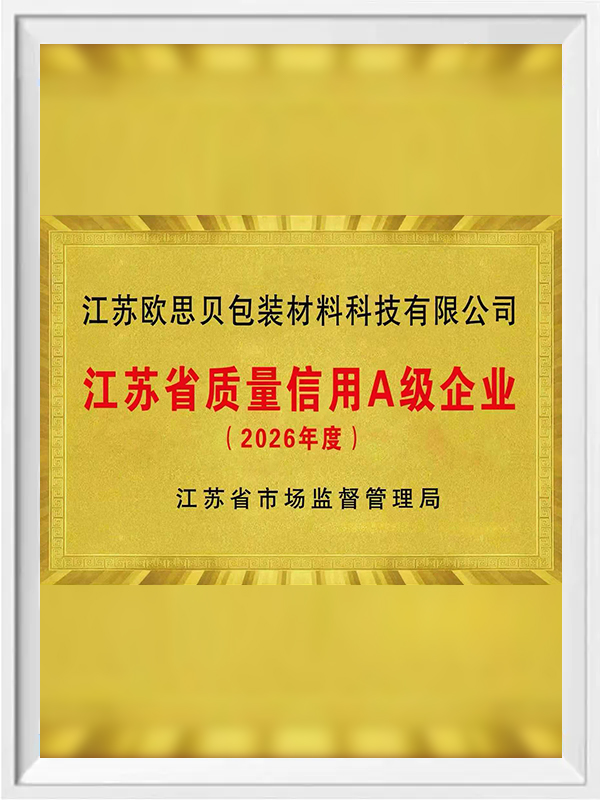
Certificate Of Honor
Industry Knowledge Expansion
Jiangsu Ousibei Packaging Material Technology Co., Ltd. is a Freeze Dried Vials manufacturer producing crimp-neck glass containers for lyophilized powders, injectable powders and biological reagents. Our range covers 2 ml to 30 ml in clear, amber and blue neutral borosilicate glass, supplied as bare bottles with matched rubber stoppers and aluminium-plastic flip-off caps.
We run 20 dual production lines in parallel, from glass tube forming through bottle production, annealing, inspection, packing and warehousing, with no intermediate outsourcing. That structure is what allows us to quote a working point, a material and a production target and then hold the same dimensional window across repeat orders.
What We Supply in This Product Family
Freeze dried vials are straight-body, crimp-neck glass containers developed specifically for the dispensing, freeze-drying and sealed storage of sterile powders. The neck geometry is the critical feature: it must accept a butyl rubber stopper during lyophilization and then take an aluminium-plastic flip-off cap after sealing, without losing vacuum integrity.
Our vials are formed from neutral borosilicate glass tube with a low coefficient of thermal expansion. They tolerate the ultra-low temperatures of the freeze-drying cycle and high-temperature, high-pressure sterilization at 121°C, and resist the thermal shock that causes breakage in lower-grade glass.
- Clear glass vial — high transparency for direct visual inspection of powder condition, colour and state change.
- Amber glass vial — blocks UV, protecting light-sensitive peptides, proteins and injectable solutions.
- Blue glass vial — blocks UV and blue light, used for short-wave-sensitive biological raw materials and premium aesthetic lines.
Standard Capacity Range and Neck Dimensions
The table below reflects the sizes we hold across the clear, amber and blue vial series. Dimensions are nominal body diameter × height in millimetres; the crimp neck is common across the range so that one stopper and cap family can serve multiple fill volumes.
| Nominal capacity | Body diameter × height | Typical application fit |
|---|---|---|
| 2 ml | 16 × 31 mm | High-value peptide and reagent powders |
| 3 ml / 4 ml | 16 × 35 / 16 × 45 mm | Medical aesthetics, sample retention |
| 5 ml – 8 ml | 22 × 33 to 22 × 45 mm | Injectable powders, collagen and extract powders |
| 10 ml / 15 ml | 22 × 50 / 22 × 65 mm | Bulk sterile powder dispensing, laboratory standards |
| 20 ml / 30 ml | 22 × 83 / 27 × 79 mm | Larger fill volumes, multi-dose powder presentation |
Where the Range Fits
The crimp-neck vial is the primary packaging format for sterile powders, and the three glass colours map onto different formulation sensitivities rather than different quality tiers.
Pharmaceutical & Biological
Antibiotic powders, lyophilized injectables, biological experimental powders and highly active micro-reagents requiring vacuum-tight sealed storage.
Medical Aesthetics
Peptide repair powders, vitamin C essence powders and eye-repair formulations, where blue or amber glass protects short-wave-sensitive actives.
Health & Laboratory
Collagen peptide powders, plant extracts, light-sensitive standard reagents and reference samples held for batch comparison.
Structural Design and Sealing Performance
Our vials use a standard straight-body crimp-neck design with controlled mouth geometry. The smooth interior wall eliminates dead zones, so washing and sterilization reach the full internal surface without residue — a requirement for sterile production lines.
- Crimp finish dimensionally matched to butyl rubber stoppers and aluminium-plastic flip-off caps.
- Vacuum sealing performance that blocks air, moisture and microorganisms, preventing potency loss in hygroscopic powders.
- Glass clarity that supports visual inspection of contents before and after lyophilization.
- Bottle mouth dimensional tolerance controlled to ±0.03 mm on our forming lines, which is what keeps crimp sealing repeatable.
How We Form and Inspect the Vials
Bottle forming runs on fully automatic robotic transfer with no manual contact with the bottle body. Glass tubes are automatically unpacked, separated, oriented and conveyed; bent or cracked tubes are removed before the heating station. The loading system holds over 5,000 tubes and supports variable-frequency linked speed control.
The main machine heats tubes in sections at 1200–1450°C. Through stretching, cutting, neck forming and mould shaping, the mouth, body and bottom are formed in one step, with the servo system controlling wall thickness uniformity.
Inspection and annealing sequence
- High-speed vision inspection of height, outer diameter, inner mouth diameter, wall thickness and bottom concavity, with automatic rejection and real-time data storage for traceability.
- Continuous mesh-belt annealing at 580–620°C for 2–3 hours with slow gradient cooling to eliminate internal stress and prevent cracking during later cleaning or sterilization.
- Final visual inspection covering 77 defect types, including cracks, bubbles, black spots, stones, chipped mouths, uneven bottoms and glass particles.
- Automatic bottle arranging, counting, box packing, sealing, carton labelling and palletizing, with a traceability QR code per carton recording forming machine, batch number and production time.
Configuration Options
Beyond the standard catalogue sizes, we develop vial configurations around the filling line and the closure system rather than around a single bottle drawing.
- Material: neutral borosilicate glass as standard for lyophilization duty; soda-lime and other borosilicate grades available where the application allows.
- Capacity development: multi-specification development across the 1 ml to 100 ml band, with the 2–30 ml crimp vial sizes held as standard.
- Structure: straight body, vial-type neck, thick-wall and special-shaped designs, plus custom dimensions to drawing or sample.
- Surface finishing: screen printing, hot stamping and spray coating for brand identification on the vial body.
- Compatibility design: bottle structure and size matched to your filling line and closure system before tooling is committed.
Capacity, Compliance and Acceptance
A single forming machine runs at 120 pcs/min. With 20 lines operating at full load for 20 hours, daily capacity reaches 2.88 million pieces, equivalent to 864 million glass bottles per year across 300 production days. Ten of those lines are dedicated to neutral borosilicate tubular vials in 2, 5, 10, 20 and 30 ml, in clear and amber glass.
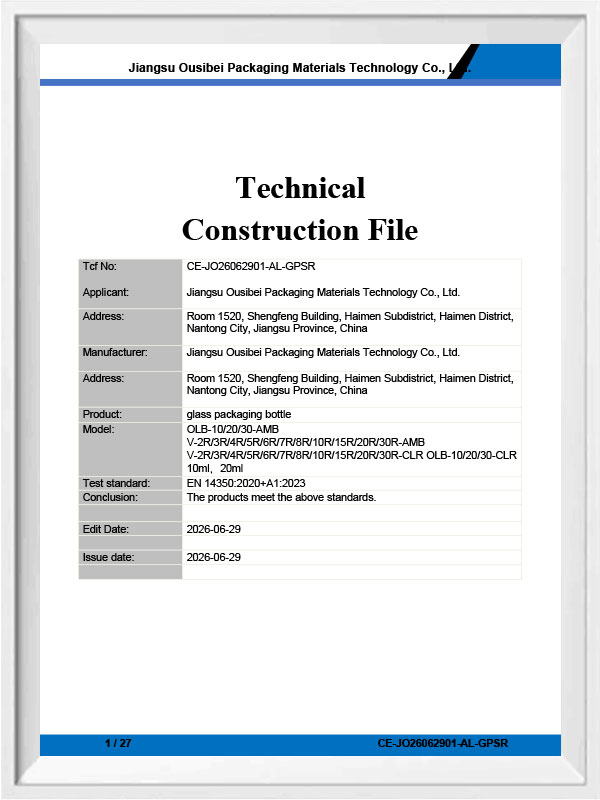
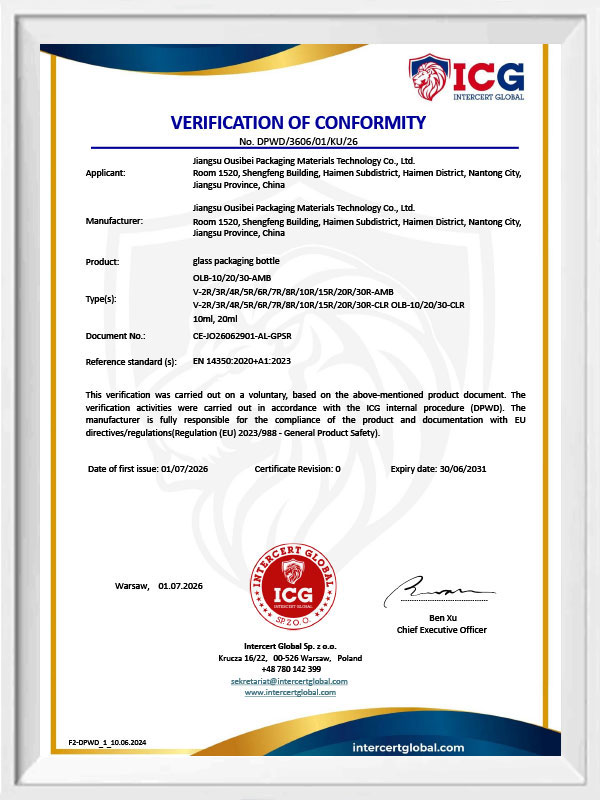
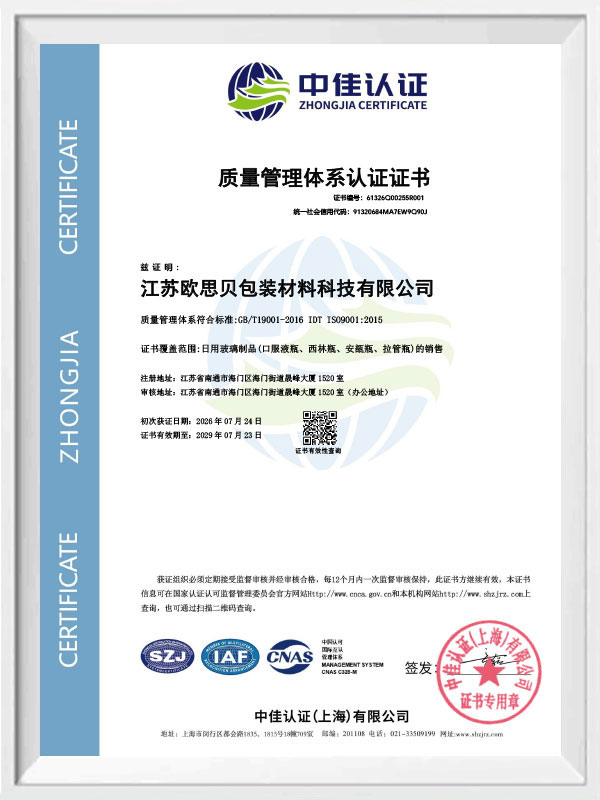
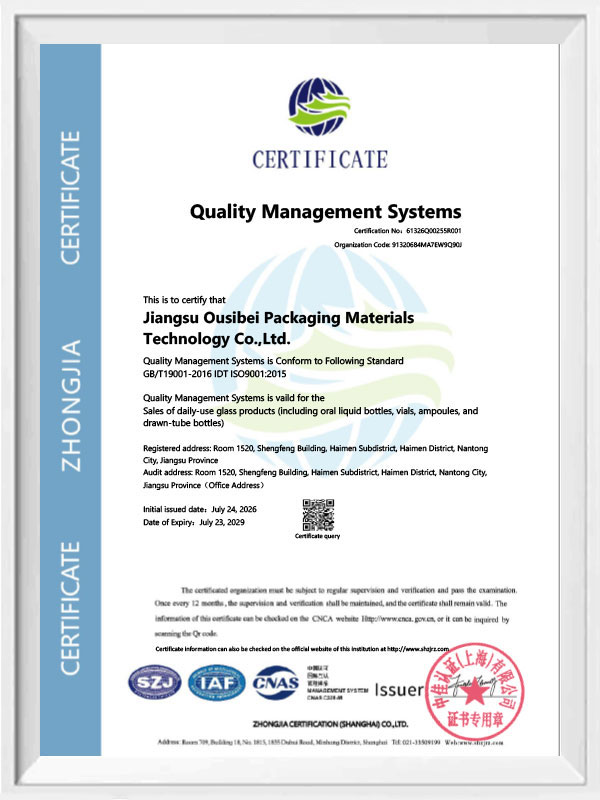
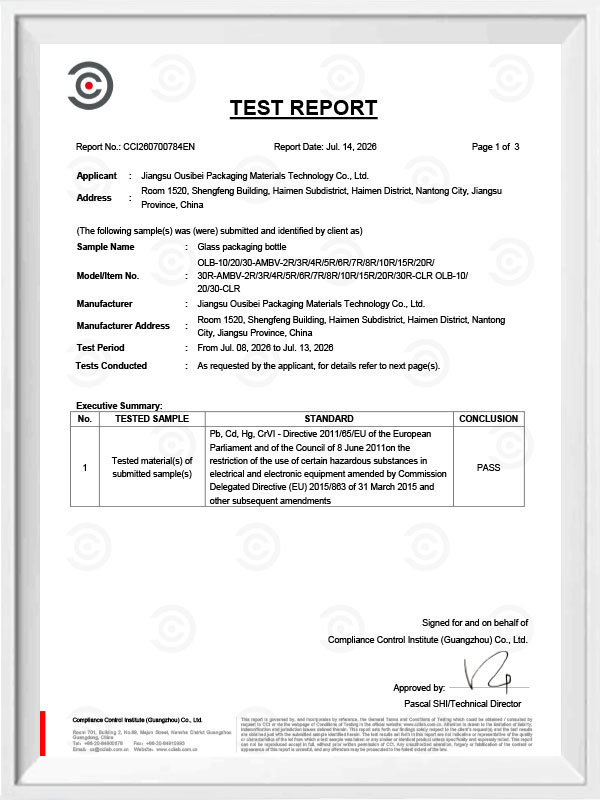
Our vial series is CE certified, RoHS tested and produced under an ISO9001 quality system. Inspection is carried out after each process, and finished products receive 100% inspection against customer requirements and the applicable international standard. Testing reports are issued with sample and mass-production stages.
Handling, Maintenance and Serviceability
Vials should be handled to avoid impact to the neck, since a deformed crimp seat compromises the seal. A complete sterilization process is required before powder filling, and once a sealed vial is opened the contents should be used in a single application.
Because the crimp neck is a controlled interface, replacement batches are produced to the same mouth dimensions as the approved sample, so existing stopper and cap tooling continues to fit. We supply matched stoppers and caps alongside the vials where the project requires a complete closure set.
Information We Use to Configure Your Solution
A usable proposal needs the working point, not just a capacity figure. These are the inputs that let us fix glass grade, wall thickness, neck dimension and packaging scope.
| Project input | What it determines |
|---|---|
| Fill volume and powder bulk density | Nominal capacity, body diameter and height |
| Formulation light sensitivity | Clear, amber or blue glass selection |
| Sterilization and lyophilization cycle | Glass grade and thermal stability requirement |
| Stopper and cap system in use | Crimp neck dimension and mouth tolerance |
| Filling line format and speed | Body concentricity, bottom concavity, carton or tray packing |
| Branding and artwork | Screen printing, hot stamping or spray coating |
| Annual volume and delivery schedule | Line allocation, MOQ evaluation and packaging scope |
Send a drawing or a physical sample and we reproduce it accurately; where the product is still being developed, we work from the packaging need, target market and application scenario through material and structure proposal, mould design, sample production and testing, confirmation, then mass production and delivery. Standard sizes carry a lower MOQ for trial orders, while custom structures are evaluated on geometry, mould complexity and material.
Related Glass Packaging in Our Range
Vials sit within a wider glass packaging programme. Where a project needs a different closure or container format, the same forming, annealing and inspection discipline applies across the range.
- Tubular vial — drawn-glass vials cut and processed from pharmaceutical tube, for general liquid and powder containment.
- Curved neck ampoule — single-use, fully sealed glass container for sterile liquid filling.
- Oral liquid bottle — soda-lime glass containers for aseptic packaging and long-term storage of oral preparations.
- Product — the full Ousibei glass packaging catalogue.
Frequently Asked Questions
Which glass grade do you use for freeze dried vials?
Our crimp-neck vials are formed from neutral borosilicate glass tube with a low coefficient of thermal expansion. It withstands the ultra-low temperatures of the freeze-drying cycle and 121°C high-pressure sterilization, and resists thermal-shock breakage. Soda-lime and other borosilicate grades are available where the application permits.
What sizes can you supply, and can you make a non-standard vial?
Standard crimp vials run from 2 ml to 30 ml in the body dimensions listed above, in clear, amber and blue glass. We also develop capacities across the 1 ml to 100 ml band and produce to customer drawings or samples, including straight body, thick-wall and special-shaped structures.
How is the crimp neck controlled so our stoppers and caps still fit?
The servo-controlled forming system holds bottle mouth dimensional tolerance to ±0.03 mm, and the crimp finish is dimensionally matched to standard butyl rubber stoppers and aluminium-plastic flip-off caps. Because the neck is a controlled interface, repeat batches are produced to the same mouth dimensions as the approved sample.
What inspection and compliance evidence comes with an order?
Inspection runs after each process, with high-speed vision checking height, outer diameter, inner mouth diameter, wall thickness and bottom concavity, followed by visual inspection for 77 defect types after annealing. Finished products receive 100% inspection against customer requirements and the applicable international standard. The vial series is CE certified, RoHS tested and produced under an ISO9001 quality system, and testing reports are issued at sample and mass-production stages.
What production capacity supports large programmes?
Twenty dual production lines run in parallel, each covering glass tube forming, bottle production, annealing, inspection, packing and warehousing without intermediate outsourcing. Single-machine forming speed is 120 pcs/min, giving 2.88 million pieces per day at full load and 864 million glass bottles per year across 300 production days.
How are the vials packed for export?
Qualified bottles are arranged by vacuum suction robotic arms and conveyed to automatic carton packaging, which completes counting, paper box packing, sealing, outer carton labelling and palletizing. Each carton carries a unique traceability QR code recording the forming machine, batch number and production time, producing bare bottle finished goods ready for pharmaceutical packaging customers.
Quick Links
Product
Contact Information
- Add: Suite 1520, Sucheng Building, 233 Ruijiang Road, Haimen District, Nantong City, Jiangsu Province, China
- Tel: +86-18795716669
-
Email:
manager@ausbaypkg.com sales@ausbaypkg.com export@ausbaypkg.com
Contact Us
Copyright by Jiangsu Ousibei Packaging Material Technology Co., Ltd. Rights
Reserved.
 Custom Empty Glass Vials Manufacturers
