
 English
 русский
 Español
 عربى
عربى
Essential oil bottle Manufacturers
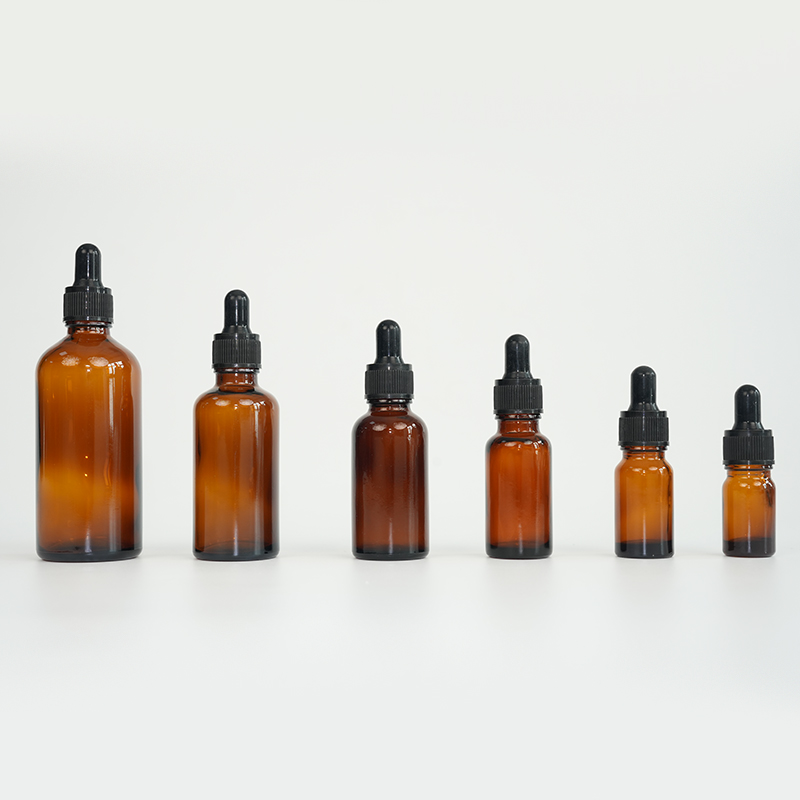
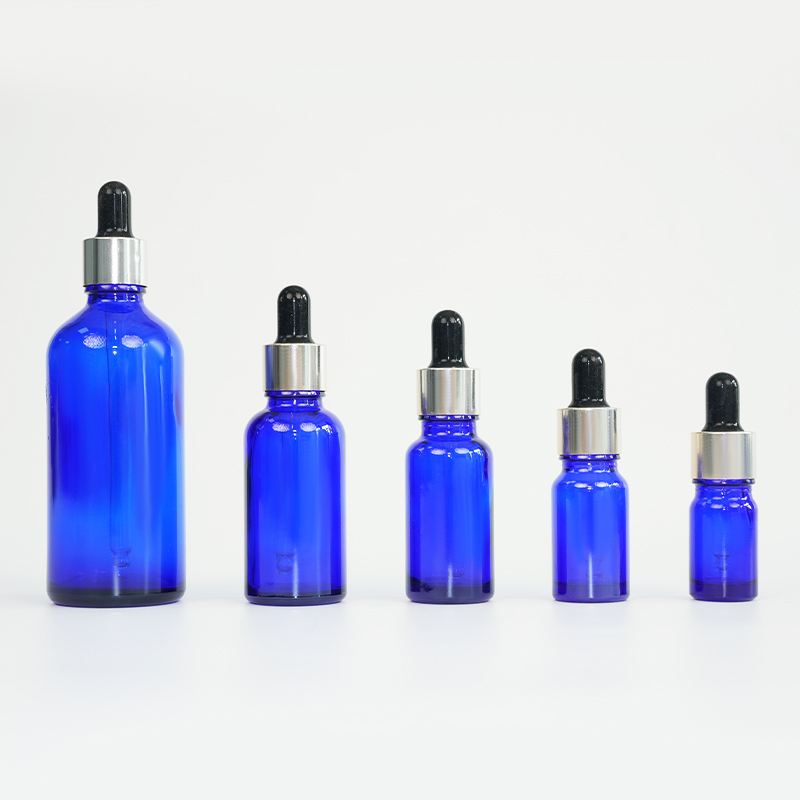
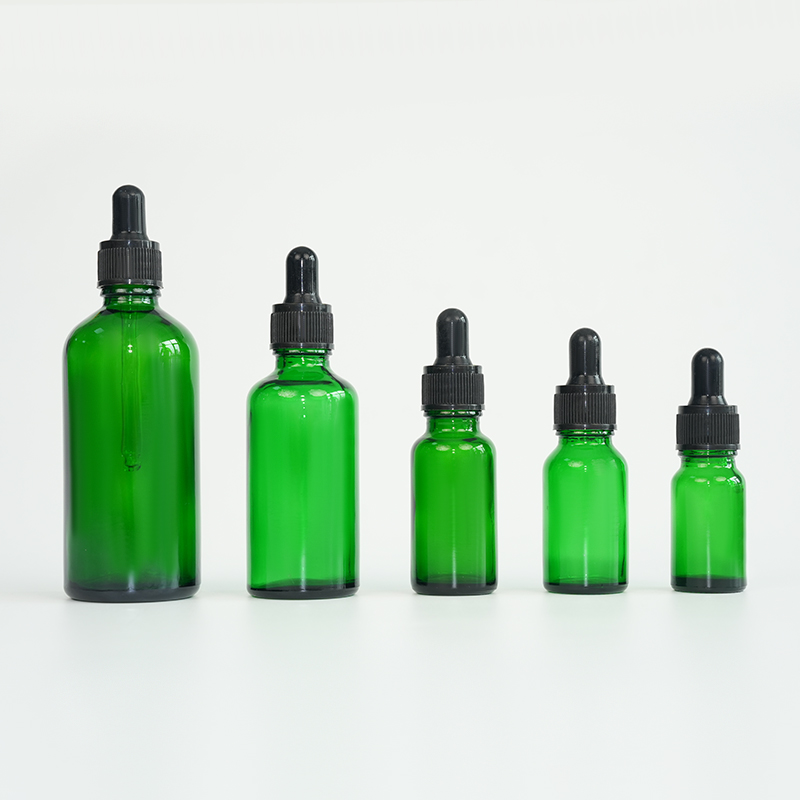
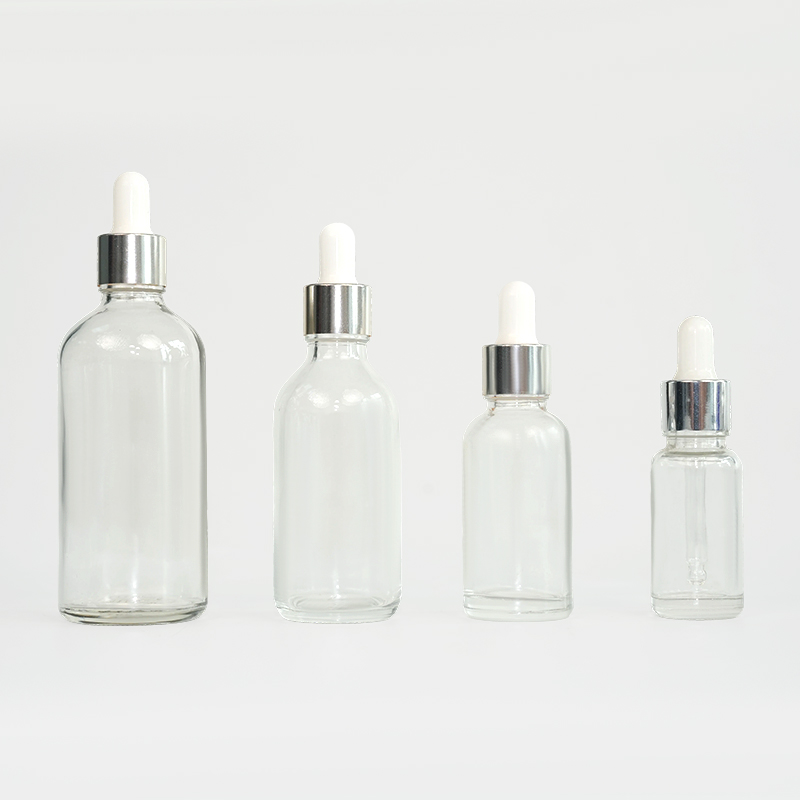
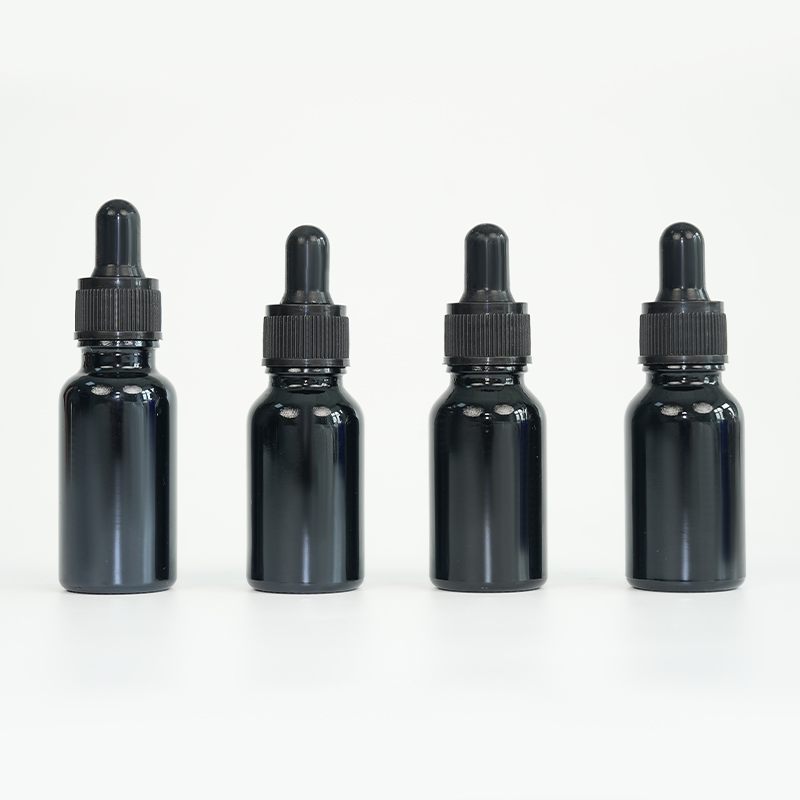
Essential oil bottles are specialized light-shielding glass containers designed for the aromatherapy industry; they specifically address the issue of oxidation and degradation, serving as the standard packaging for single-origin essential oils and blended skincare serums.
Primary Uses: Suitable for the dispensing and long-term, light-protected storage of single-origin plant essential oils, blended essential oils, skincare extracts, aromatherapy oils, and highly active plant concentrates.
Material Characteristics: Standardized amber or blue light-shielding glass blocks UV radiation; the glass is resistant to corrosion from plant oils and does not react chemically with active ingredients, thereby preserving the oil's original properties.
Structural Design: The standard bottle neck accommodates specialized tamper-evident caps and precision dropper caps, allowing for accurate dispensing; the bottle body is rounded for a comfortable grip, and a full range of sizes is available to meet needs from small samples to bulk dispensing.
Core Advantages: Exceptional light-shielding and anti-oxidation capabilities effectively extend shelf life; dispensing is precise and controlled; the material is safe and non-toxic, meeting global safety standards for the beauty and aromatherapy industries.
Precautions: Store finished bottles in a cool, dark warehouse away from direct sunlight; tightly reseal the dropper cap after opening to minimize ingredient oxidation caused by air exposure.
About Ousibei
As China 10ml Essential Oil Bottle Manufacturers and Empty Essential Oil Bottle Suppliers, Ousibei specializes in the research, development, and production of glass
packaging materials, supported by a complete production system and quality control process.
 Read More



News
-
As a glass packaging manufacturer with over two decades in the field, we've seen how the right vial can make all the difference in product stability and user confidence. Among the many formats we produce, the tubular glass vial stands out as a versatile and reliable choice for e...
READ MORE -
Oral liquid products place special demands on packaging. The bottle must protect the formulation, maintain stability over time, fit high-speed filling lines, and communicate trust to the end user. As a glass packaging manufacturer with more than two decades of experience, we hav...
READ MORE -
Materials & Packaging Glass or Plastic: The Real Lifespan of a Liquid Medicine Bottle Two materials, two very different definitions of "durable." One resists chemical aging for decades. The other survives the drops, shipping, and daily handling that actually destroy bottles....
READ MORE
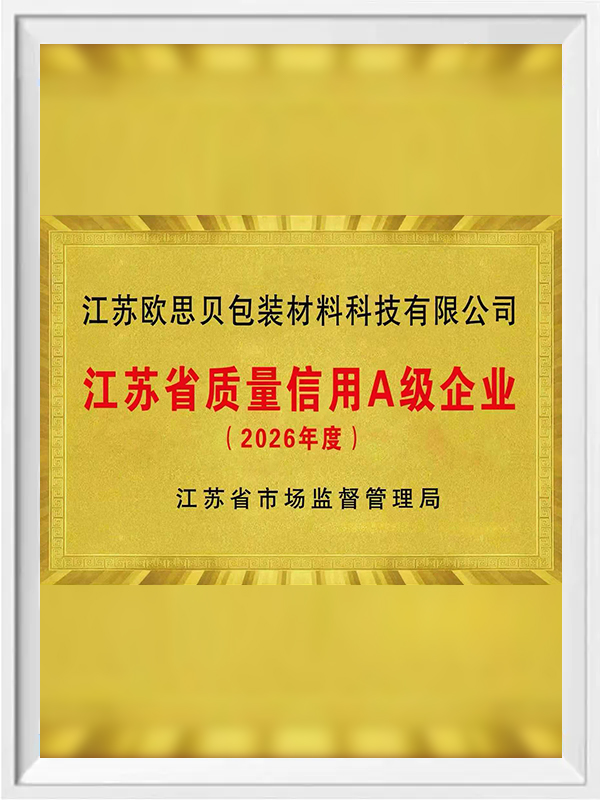
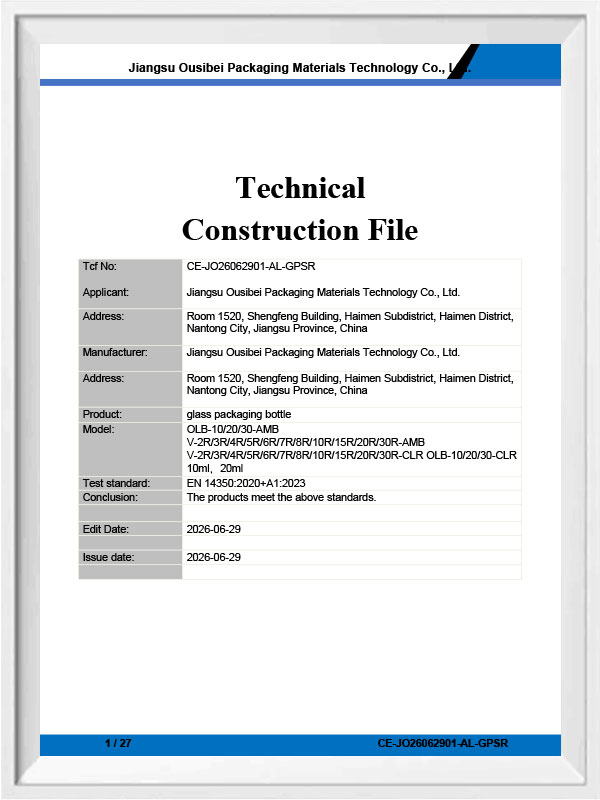
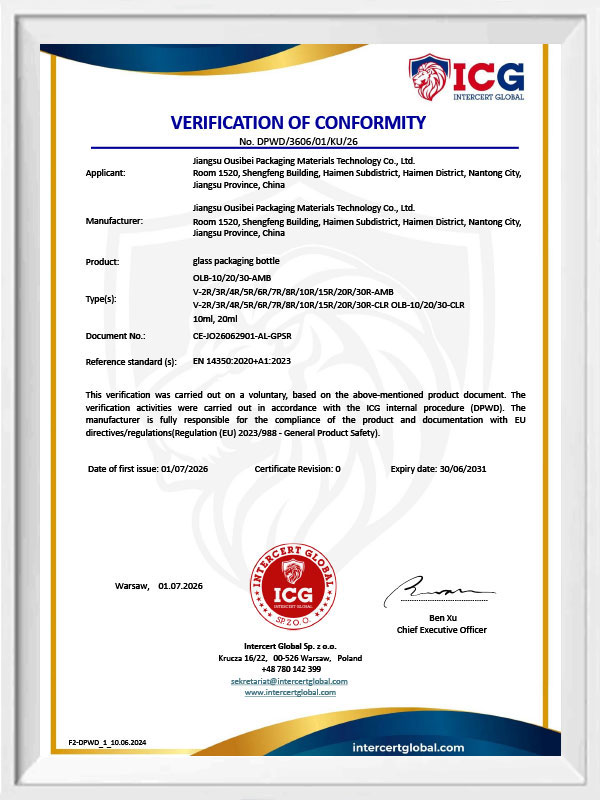
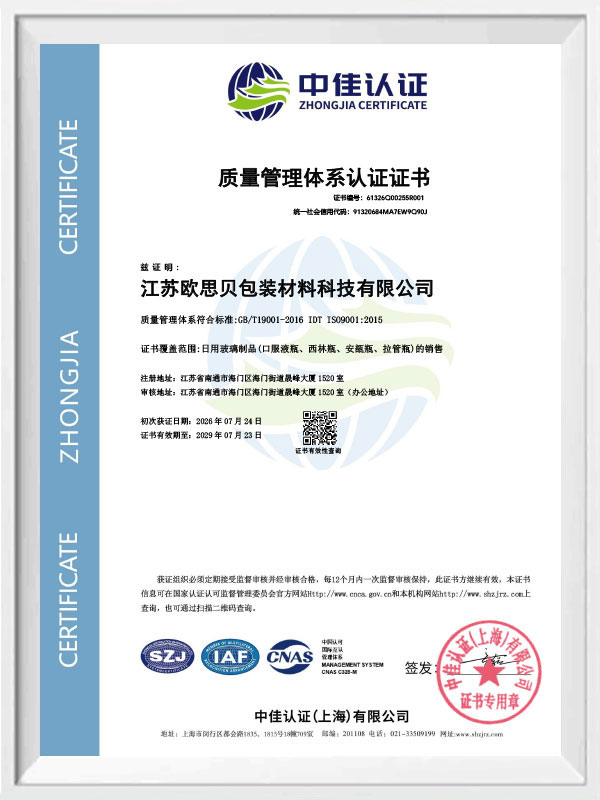
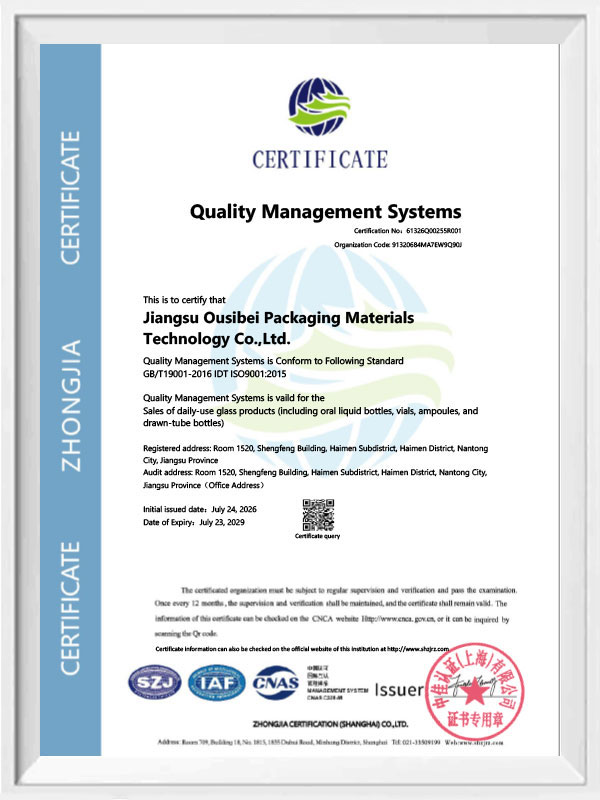
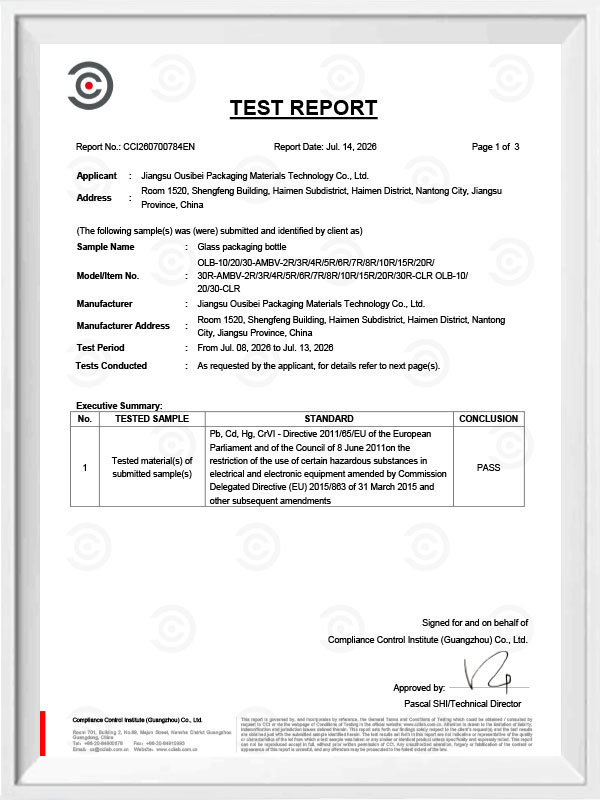
Certificate Of Honor
Industry Knowledge Expansion
Jiangsu Ousibei Packaging Material Technology Co., Ltd. manufactures light-shielding glass containers for the aromatherapy, fragrance and skincare industries. Our Essential oil bottle range covers amber, blue, green, clear and black glass in 5 ml, 10 ml, 15 ml, 20 ml, 30 ml, 50 ml and 100 ml capacities, produced on our own tubular glass lines in Nantong, Jiangsu.
The range is built for single-origin essential oils, blended aromatherapy oils, botanical extracts, active skincare concentrates and laboratory light-sensitive samples. Bottles are supplied with matched dropper caps, orifice reducers and tamper-evident closures, with screen printing, hot stamping and spray coating available for brand decoration.
What We Manufacture in This Category
Ousibei is a glass packaging manufacturer focused on the research, development and production of glass containers. The essential oil bottle family is produced on the same full-process tubular lines used for our pharmaceutical and oral liquid containers, so bottle mouth dimensions, wall thickness and annealing follow the same controlled sequence from glass tube forming through bottle production, annealing, inspection and packing.
Each colour variant is positioned for a specific light-protection and brand requirement rather than being a cosmetic alternative. Amber and blue glass are the standard choices for photosensitive oils; green and black glass serve botanical and premium positioning; clear glass suits short-cycle retail and sample programmes where content visibility matters.
Available Colour Range
Amber glass
UV-blocking neutral glass for single-note essential oils, massage blends and antioxidant skincare concentrates. Threaded neck accepts droppers and orifice reducers.
Blue glass
Deeper light blocking than amber, used for highly photosensitive premium oils and restorative blends where a distinctive shelf appearance is required.
Green glass
Botanical and herbal positioning for plant-extract oils, natural restorative essences and trial-size aromatherapy samples.
Clear and black glass
Clear for content visibility and retail sampling; black for maximum light exclusion and a premium dark aesthetic.
Application Fit Across the Range
Essential oil packaging has to protect volatile, oxidation-sensitive contents while remaining practical on a filling line. Our bottles are designed around that balance: a controlled neck geometry for closure sealing, a uniform wall for filling and capping stability, and a smooth body surface for decoration and labelling.
| Application | Typical Glass | Capacity Focus | Closure Direction |
|---|---|---|---|
| Single-origin essential oils | Amber, blue | 5–30 ml | Dropper, orifice reducer |
| Blended aromatherapy and massage oils | Amber, green | 30–100 ml | Dropper, screw cap |
| Active skincare concentrates | Amber, blue, black | 10–50 ml | Dropper, tamper-evident plug |
| Retail and travel samples | Clear, green, amber | 5–15 ml | Orifice reducer, dropper |
| Laboratory light-sensitive samples | Amber, black | 5–30 ml | Screw cap, inner plug |
Materials and Critical Specifications
Essential oil bottles are produced from neutral glass with high chemical inertness, so the container does not react with terpenes, esters or carrier oils. Light-shielding colour is delivered in the glass itself rather than through a surface coating, which keeps UV protection stable across the bottle body and shoulder.
- Capacity range: 5 ml to 100 ml stock capacities, with 1 ml to 100 ml development supported across our glass packaging programme.
- Neck design: standard threaded neck for dropper caps, orifice reducers and tamper-evident inner plugs.
- Wall and mouth control: servo-controlled forming maintains wall thickness uniformity; bottle mouth dimensional tolerance can reach ±0.03 mm on our tubular forming lines, supporting consistent closure fit.
- Annealing: continuous mesh belt furnace with segmented temperature control, constant-temperature annealing at 580–620 °C for 2–3 hours, followed by gradient cooling to relieve internal stress.
- Surface: smooth body suitable for screen printing, hot stamping and spray coating.
Configuration Options and Decoration
We configure each essential oil bottle around the filling line, the closure system and the retail presentation the brand requires. Capacity, neck structure, glass colour and decoration are treated as one specification set rather than separate purchases.
Structure
Screw neck, straight body, rounded shoulder, thick-wall and special-shaped designs developed from drawings or samples.
Material
Soda-lime, low borosilicate, medium borosilicate and high borosilicate glass options according to content and process requirements.
Decoration
Screen printing, hot stamping and spray coating for logo, dosage markings and brand colour.
Compatibility
Bottle structure and dimensional matching for filling lines and closure systems, including dropper and plug fit.
Production Capacity and Process Control
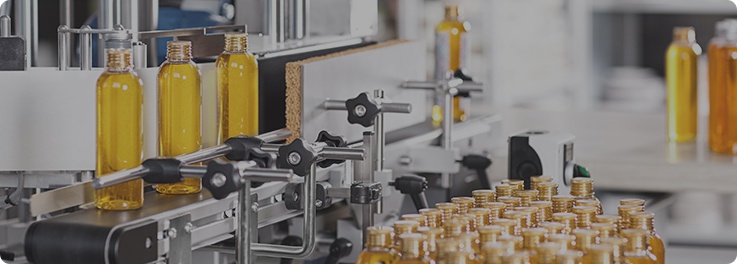
Twenty dual production lines operate in parallel across two main sections, covering glass tube forming, bottle production, annealing, inspection, packing and warehousing without intermediate outsourcing. Bottle forming speed reaches 120 pcs/min per forming machine, with daily capacity of approximately 2.88 million pieces based on 20 lines running 20 hours at full load.
Forming runs on fully automatic robotic transfer with no manual contact with the bottle body. Glass tubes are heated in sections at 1200–1450 °C, then stretched, cut, neck-formed and moulded in one step. High-speed vision cameras check bottle height, outer diameter, inner mouth diameter, wall thickness and bottom concavity, and reject out-of-tolerance pieces automatically.
After annealing, bottles pass a final inspection machine that screens for 77 defect types, including cracks, bubbles, black spots, stones, chipped mouths, uneven bottoms and loose glass particles. Qualified bottles are arranged by vacuum suction arms and packed automatically, with each carton carrying a traceability QR code recording the forming machine, batch number and production time.
Quality Assurance and Acceptance
Inspection is carried out after each process stage, and finished products are inspected 100% against customer requirements and the applicable international standard. For essential oil bottles, the acceptance scope normally covers dimensional conformity, mouth and thread fit with the nominated closure, appearance defects, annealing condition and packing integrity.
- Dimensional and visual inspection records retained for traceability by batch.
- Closure fit verification against supplied dropper, reducer or plug samples.
- Pre-shipment inspection and testing reports issued with the shipment.
- Defective glass crushed and returned to the remelting workshop, reducing raw material loss.
Related Glass Packaging in Our Range
Brands that package oils, serums and liquid supplements often source several container types from one programme. Our wider Product range includes Perfume decanting bottles for fragrance sampling, Mini Glass Spray Bottles for room and body mists, and Oral liquid bottle formats for liquid nutraceuticals and wellness drinks.
Information We Use to Configure Your Solution
To propose a workable essential oil bottle specification, we work from the filling and market conditions rather than a capacity figure alone. The following inputs let us confirm structure, material, decoration and packing scope in one proposal.
| Project Input | What It Determines |
|---|---|
| Content type and formulation | Glass colour, material grade and light-protection level |
| Target fill volume and headspace | Capacity selection and bottle body proportions |
| Closure or dropper specification | Neck thread, mouth tolerance and sealing design |
| Filling line and capping method | Wall thickness, body straightness and dimensional consistency |
| Decoration artwork and finish | Screen printing, hot stamping or spray coating process |
| Order quantity and packing preference | MOQ evaluation, carton configuration and palletising |
Standard products carry a lower MOQ for trial orders. For customized structures, MOQ is evaluated against bottle structure, mould complexity, material requirements and production process. Our development sequence runs from technical requirement discussion and material/structure proposal through mould design, sample production and testing, client confirmation, then mass production and delivery.
Storage, Handling and Serviceability
Finished essential oil bottles should be stored in a cool, dark warehouse away from direct sunlight, and dropper caps should be resealed tightly after opening to limit oxidation from air exposure. Bottles are supplied as bare finished glass in paper boxes and export cartons, with automatic counting, sealing, labelling and palletising on the packing line.
Spare parts and replacement closures are handled through the same order channel as the original bottles, and our technical team supports filling-line questions, closure fit issues and repeat-order specification control. Documentation covering dimensions, packing configuration and inspection records is issued with each batch.
Frequently Asked Questions
Which capacities do you produce for essential oil bottles?
Stock capacities are 5 ml, 10 ml, 15 ml, 20 ml, 30 ml, 50 ml and 100 ml. Across our glass packaging programme we support capacity development from 1 ml to 100 ml, covering single-use sample formats through to bulk dispensing bottles.
Can you match a specific dropper or orifice reducer?
Yes. We design bottle neck structure and dimensions for compatibility with the nominated closure system, and verify mouth and thread fit against supplied dropper, reducer or plug samples before mass production.
Do you support custom colours and decoration?
Amber, blue, green, clear and black glass are standard. Screen printing, hot stamping and spray coating are available for logos, dosage markings and brand colour, applied to a smooth bottle body.
How is quality controlled during production?
Inspection follows each process stage. High-speed vision cameras check height, outer and inner mouth diameter, wall thickness and bottom concavity during forming; after annealing, a final inspection machine screens 77 defect types. Finished products receive 100% inspection against customer requirements and the applicable international standard.
What is the minimum order quantity for a customized bottle?
Standard products are available at lower MOQ for trial orders. For customized structures, MOQ is evaluated based on bottle structure, mould complexity, material requirements and production process, and is confirmed with the quotation.
Can you produce from our existing drawing or sample?
Yes. For customers with mature products we produce according to drawings or samples with accurate reproduction, and we also support joint development based on packaging needs, target market and application scenario.
Quick Links
Product
Contact Information
- Add: Suite 1520, Sucheng Building, 233 Ruijiang Road, Haimen District, Nantong City, Jiangsu Province, China
- Tel: +86-18795716669
-
Email:
manager@ausbaypkg.com sales@ausbaypkg.com export@ausbaypkg.com
Contact Us
Copyright by Jiangsu Ousibei Packaging Material Technology Co., Ltd. Rights
Reserved.
 Custom Essential oil bottle Suppliers
