
 English
 русский
 Español
 عربى
عربى
Perfume decanting bottles Manufacturers
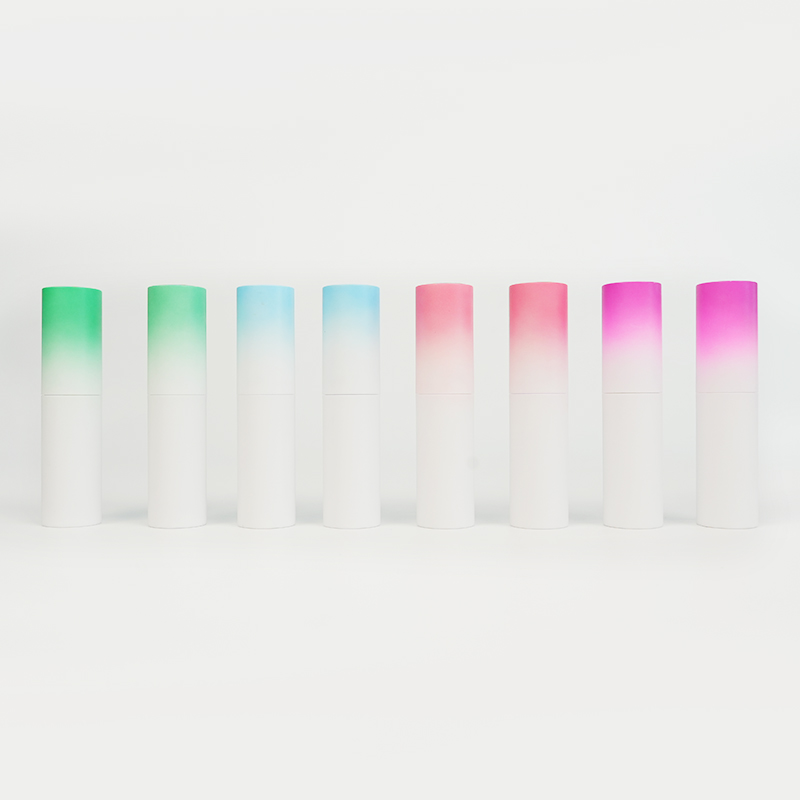
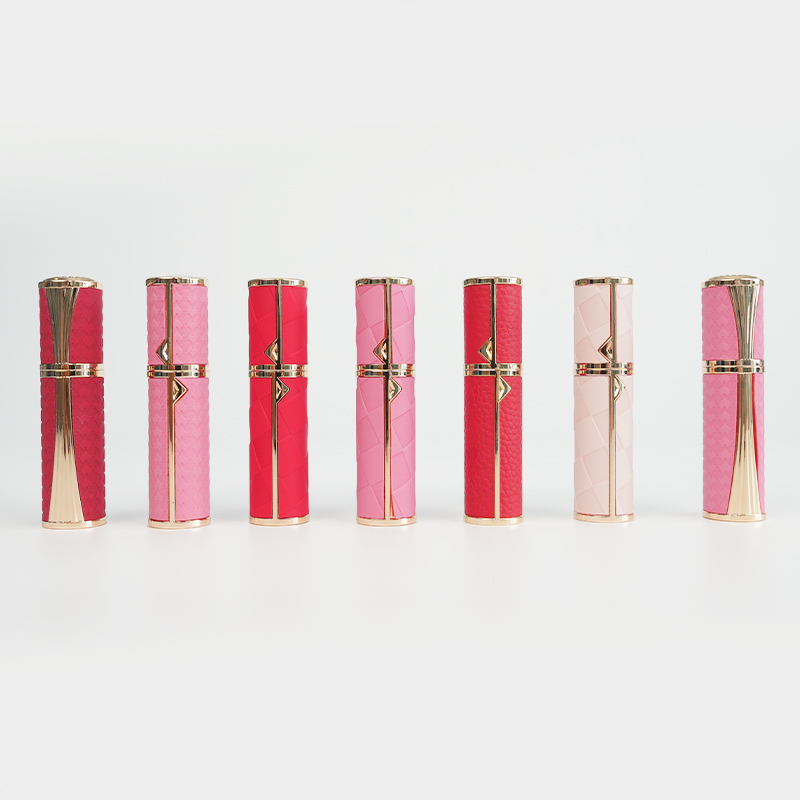
Perfume decanting bottles are exquisite, thin-walled glass containers specifically designed for fragrances. Prized for their portability, evaporation resistance, and aesthetic appeal, they are the mainstream choice in the beauty industry for dispensing samples.
Primary Uses: Decanting bulk perfume, portable fragrance storage, beauty store sample giveaways, custom fragrance gift sets, and travel-sized fragrance storage.
Material Characteristics: Made of highly transparent, lightweight glass that resists corrosion from high-concentration alcohol and is chemically compatible with perfume bases; the glass is odorless and does not alter the fragrance's original scent profile.
Structural Design: Small neck openings precisely fit spray pumps, rollerball caps, and sealing plugs; available in diverse shapes with customization options such as screen printing, hot stamping, and logo engraving to meet brand presentation needs.
Key Advantages: Excellent sealing capabilities that lock in the scent and significantly slow evaporation; compact and portable, with sizes ranging from mini samples to daily carry options, making them suitable for various scenarios.
Precautions: Do not fill the bottle to capacity; leave space for thermal expansion and contraction to prevent leakage caused by liquid expansion in high-temperature environments. Tighten the spray pump for long-term storage to minimize scent loss.
About Ousibei
As China Glass Perfume Bottles Manufacturers and Perfume Dispenser Bottles Suppliers, Ousibei specializes in the research, development, and production of glass
packaging materials, supported by a complete production system and quality control process.
 Read More




News
-
As a glass packaging manufacturer with over two decades in the field, we've seen how the right vial can make all the difference in product stability and user confidence. Among the many formats we produce, the tubular glass vial stands out as a versatile and reliable choice for e...
READ MORE -
Oral liquid products place special demands on packaging. The bottle must protect the formulation, maintain stability over time, fit high-speed filling lines, and communicate trust to the end user. As a glass packaging manufacturer with more than two decades of experience, we hav...
READ MORE -
Materials & Packaging Glass or Plastic: The Real Lifespan of a Liquid Medicine Bottle Two materials, two very different definitions of "durable." One resists chemical aging for decades. The other survives the drops, shipping, and daily handling that actually destroy bottles....
READ MORE
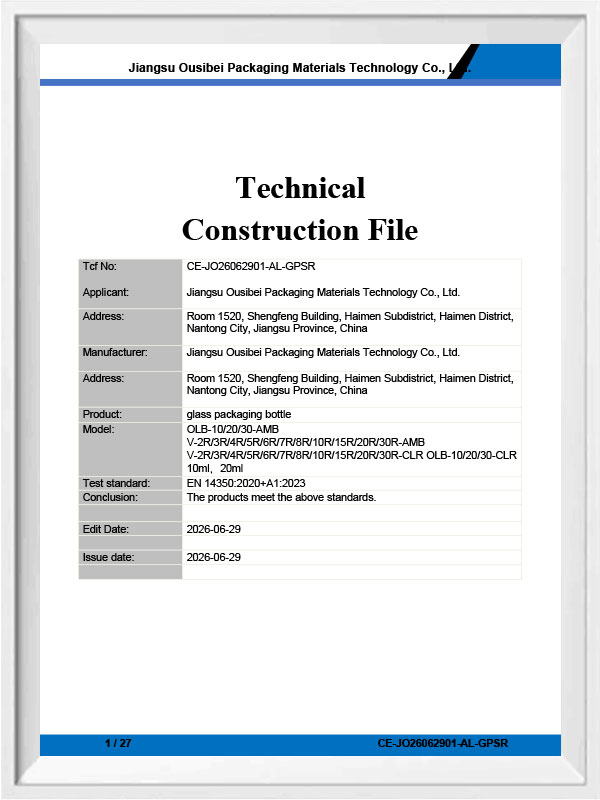
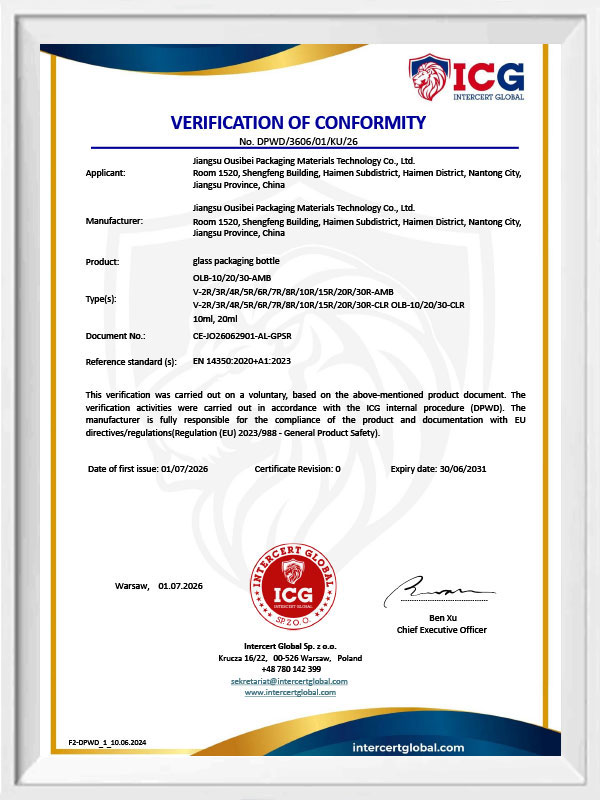
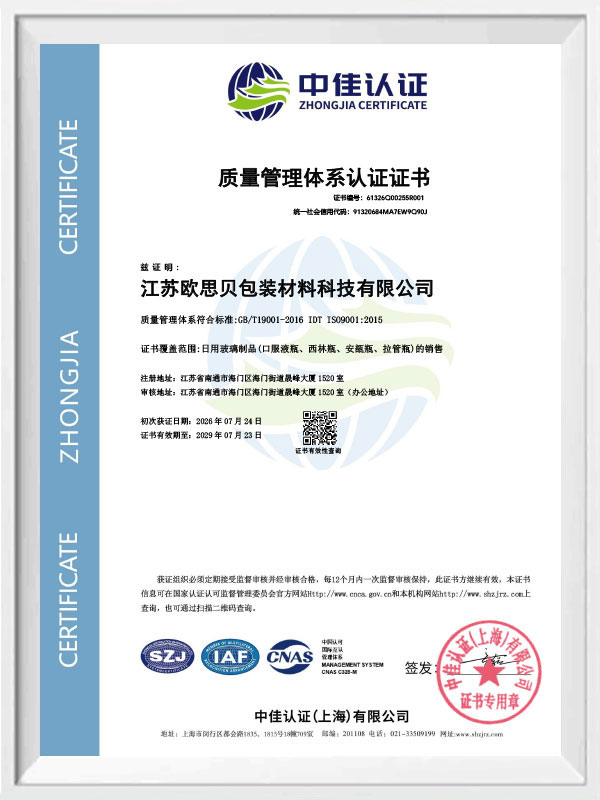
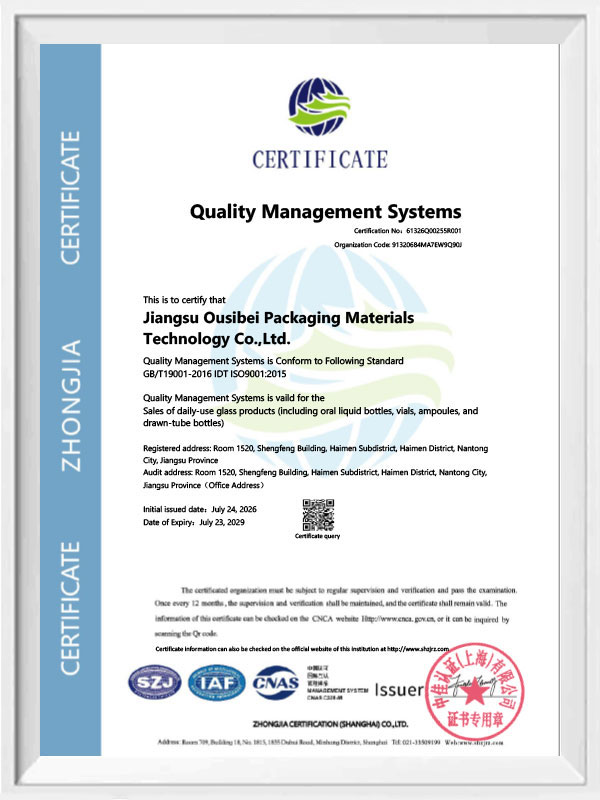
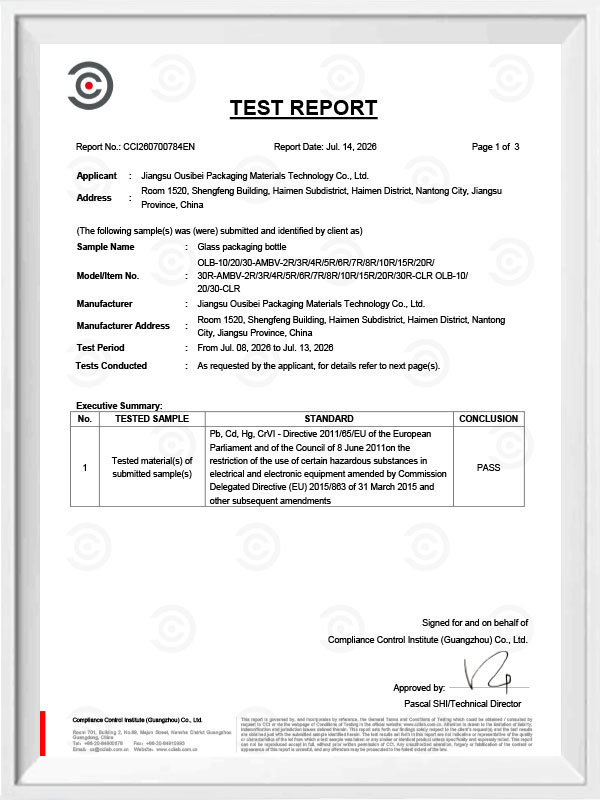
Certificate Of Honor

Industry Knowledge Expansion
Jiangsu Ousibei Packaging Material Technology Co., Ltd. manufactures Perfume decanting bottles for fragrance brands, beauty retail, aromatherapy studios and travel-size gift programs. Our range covers thin-wall clear and amber glass decanting bottles in 2 ml, 3 ml, 5 ml, 8 ml and 10 ml capacities, produced on tubular glass forming lines with matched spray pumps, rollerball caps and sealing plugs.
Because the bottle is the first thing a customer touches, we treat neck geometry, wall thickness and surface finish as one specification rather than three separate items. Every decanting bottle we quote is built around the fragrance base, the filling line and the closure system the brand already uses.
What We Manufacture in This Category
Ousibei is a China glass perfume bottle manufacturer working from tubular glass forming through annealing, inspection and packing on the same site. The decanting bottle series is a thin-wall, high-clarity container family intended for decanting bulk fragrance, portable touch-up use, retail sampling and gift-set assembly.
Two stocked configurations anchor the range, and both accept the same downstream customization path.
2 ml / 3 ml Clear Glass Decanting Bottle
Neutral clear glass that shows the true colour of the fragrance. Screw-thread neck paired with a fine-mist spray pump. Suited to sample giveaways, tester counters and travel touch-up packs.
5 ml / 8 ml Amber Glass Decanting Bottle
Amber glass filters UV exposure, which protects light-sensitive woody, resinous and essential-oil-based accords. Same screw-top sealing geometry and pump compatibility as the clear series.
Where Decanting Bottles Fit Across Our Glass Range
Decanting bottles sit at the small-capacity, high-clarity end of our Product portfolio. Adjacent series share the same forming, annealing and inspection discipline but serve different filling and closure duties.
| Product Series | Typical Capacity | Closure / Finish | Application Fit |
|---|---|---|---|
| Perfume decanting bottles | 2–10 ml | Screw neck, spray pump, rollerball, plug | Fragrance sampling, travel decanting, gift sets |
| Mini Glass Spray Bottles | Small-capacity | Spray pump | Liquid dispensing, airtight daily spraying |
| Essential oil bottle | Small-capacity | Screw neck, dropper or plug | Aromatherapy, light-shielded concentrate storage |
| Tubular vial | 2–30 ml | Crimp neck | Laboratory and R&D sample retention |
| Oral liquid bottle | 10–50 ml | Crimp or screw finish | Nutraceutical and functional oral liquids |
Material and Chemical Compatibility
Perfume concentrates are aggressive toward many substrates because of their high alcohol content and aromatic ester load. Our decanting bottles are formed from neutral glass that resists corrosion from high-concentration alcohol and stays chemically inert against the fragrance base, so the original scent profile is not altered by the container.
- Clear neutral glass for colour-true presentation of light accords and citrus top notes.
- Amber glass for UV-sensitive woody, resinous and essential-oil-based blends.
- Odourless glass surface that does not transfer taste or smell into the fill.
- Thin-wall forming that keeps the bottle light for travel and sample logistics.
Critical Specifications We Control
The neck is the functional heart of a decanting bottle. If the mouth diameter drifts, the pump either leaks or will not seat, and the whole sample program fails at the filling line. Our forming process uses servo-controlled wall thickness and holds bottle mouth dimensional tolerance to ±0.03 mm, which keeps crimp and screw closures compatible run after run.
- Capacity: 2 ml, 3 ml, 5 ml, 8 ml and 10 ml standard points, with development from 1 ml to 100 ml across the wider glass range.
- Neck geometry: small neck openings sized to fit spray pumps, rollerball caps and sealing plugs.
- Wall uniformity: servo-controlled forming for consistent body thickness and a stable shoulder.
- Surface: smooth polished finish ready for screen printing, hot stamping or spray coating.
- Sealing: screw-thread engagement that limits evaporation during long-term storage.
Production, Capacity and Quality Control
Twenty dual production lines run in parallel across two sections, each covering glass tube forming, bottle production, annealing, inspection, packing and warehousing without intermediate outsourcing. A single forming machine runs at 120 pcs/min, which supports both trial batches and repeat mass-production orders from the same tooling.
Quality control is embedded at three points rather than applied only at the end:
- High-speed vision inspection of height, outer diameter, inner mouth diameter, wall thickness and bottom concavity, with automatic rejection and real-time data storage.
- Continuous mesh-belt annealing at 580–620 °C for 2–3 hours with gradient cooling to remove internal stress before cleaning or sterilization.
- Final visual inspection covering 77 defect types, including cracks, bubbles, black spots, stones, chipped mouths and uneven bottoms.
Each carton carries a traceability QR code recording the forming machine, batch number and production time, so a decanting bottle can be traced back to its forming run if a filling issue appears months later.
Customization and Closure Matching
We produce to drawings or to supplied samples with accurate reproduction, and we also develop new structures jointly with brands that are still defining their packaging. Customization covers the full chain from material selection to component matching.
- Structure: screw neck, straight body, special-shaped bottle, curved neck and thick-wall variants.
- Material: soda-lime, low borosilicate, medium borosilicate and high borosilicate glass options.
- Decoration: screen printing, hot stamping and spray coating for brand presentation.
- Compatibility: bottle structure and dimension design matched to filling lines and closure systems.
The development sequence runs from technical requirement discussion, through material and structure proposal, mold design, sample production and testing, client confirmation, then mass production and delivery. Standard products carry a lower MOQ for trial orders; customized items are evaluated on structure, mold complexity, material and process.
Filling, Handling and Storage Notes
Two practical points decide whether a decanting bottle performs in the field. First, do not fill to capacity — leave headspace for thermal expansion and contraction, otherwise liquid expansion in a hot vehicle or warehouse can force leakage past the pump. Second, tighten the spray pump fully for long-term storage so scent loss stays minimal.
For filling lines, we recommend confirming the pump stem length, dip tube cut angle and torque specification together with the bottle drawing, because these three items interact with neck tolerance. When a brand supplies its own pump, we match the neck to that component rather than to a generic standard.
Information We Use to Configure Your Solution
A usable proposal needs the working point, not just a capacity. The following inputs let us fix glass type, neck dimension, decoration and packing scope in one pass.
| Project Input | Why We Need It |
|---|---|
| Target capacity and fill volume | Sets bottle size and headspace allowance |
| Fragrance base and alcohol content | Confirms glass type and compatibility |
| Closure type or supplied pump sample | Fixes neck diameter and thread form |
| Clear or amber glass preference | Determines light protection level |
| Decoration artwork and finish | Drives printing or hot stamping setup |
| Order quantity and trial batch size | Sets MOQ and tooling route |
| Packing and delivery scope | Defines bare-bottle, box or carton packing |
Frequently Asked Questions
Which capacities do you produce for perfume decanting bottles?
Our stocked decanting range covers 2 ml, 3 ml, 5 ml, 8 ml and 10 ml in clear and amber glass. Development work across the wider glass range supports capacities from 1 ml to 100 ml when a brand needs a non-standard fill point.
How do you keep the spray pump compatible with the bottle neck?
We hold bottle mouth dimensional tolerance to ±0.03 mm through servo-controlled forming, and we design the neck against the actual pump, rollerball or plug the customer supplies. If you send a pump sample, we match thread form and stem length to it rather than to a generic standard.
Can you print or hot stamp our brand on the bottle?
Yes. The polished bottle surface accepts screen printing, hot stamping and spray coating. Decoration is planned together with capacity and structure so the artwork area matches the formed bottle rather than being adjusted afterwards.
What inspection does each decanting bottle pass before packing?
Bottles pass high-speed vision inspection for height, outer diameter, inner mouth diameter, wall thickness and bottom concavity, then continuous annealing at 580–620 °C, then a final visual check covering 77 defect types. Each carton is labelled with a traceability QR code recording forming machine, batch and production time.
Do you support trial orders before mass production?
Standard products carry a lower MOQ for trial orders, and our development sequence includes sample production and testing before client confirmation. Customized items are quoted after we review structure, mold complexity, material and process requirements.
How should decanting bottles be filled and stored?
Leave headspace rather than filling to capacity, so thermal expansion does not force liquid past the seal in high-temperature environments. For long-term storage, tighten the spray pump fully to minimise scent loss through evaporation.
Quick Links
Product
Contact Information
- Add: Suite 1520, Sucheng Building, 233 Ruijiang Road, Haimen District, Nantong City, Jiangsu Province, China
- Tel: +86-18795716669
-
Email:
manager@ausbaypkg.com sales@ausbaypkg.com export@ausbaypkg.com
Contact Us
Copyright by Jiangsu Ousibei Packaging Material Technology Co., Ltd. Rights
Reserved.
 Custom Glass Perfume Bottles Suppliers
